
“Black feminists and LGBTQ activists are labeled “hijackers” and said to be divisive or co-opting or distracting from what is important, and what is “important” is the mainstream narrative propped up by patriarchy and misogyny (straight-up hatred of women).”
― Charlene Carruthers, Unapologetic: A Black, Queer, and Feminist Mandate for Radical Movements
Category Archives: Asia Noir
Graphic Dreams: China-Based Artist Reimagines Anime and Queer Beauty
“This is a story of art without markets, drama without a script, narrative without progress. The queer art of failure turns on the impossible, the improbable, the unlikely, and the unremarkable. It quietly loses, and in losing it imagines other goals for life, for love, for art, and for being.”
― J. Jack Halberstam, The Queer Art of Failure
Silent Scream: Conversations Rarely Had About Suicide & One Activist’s Mission

“It’s my experience that people are a lot more sympathetic if they can see you hurting, and for the millionth time in my life I wish for measles or smallpox or some other easily understood disease just to make it easier on me and also on them.”
― Jennifer Niven, All the Bright Places
Fake-cation – Tracing Illusions of Black, Queer Luxury in China

“To subject to scrutiny the mechanisms which render life painful, even untenable, is not to neutralize them; to bring to light contradictions is not to resolve them. But, as skeptical as one might be about the efficacy of the sociological message, we cannot dismiss the effect it can have by allowing sufferers to discover the possible social causes of their suffering and, thus, to be relieved of blame.”
― Pierre Bourdieu, The Weight of the World: Social Suffering in Contemporary Society
Americanah: Delightful Parallels with the Queer, Migrant Story

“If you don’t understand, ask questions. If you’re uncomfortable about asking questions, say you are uncomfortable about asking questions and then ask anyway. It’s easy to tell when a question is coming from a good place. Then listen some more. Sometimes people just want to feel heard. Here’s to possibilities of friendship and connection and understanding.”
― Chimamanda Ngozi Adichie, Americanah
Queer Covid Chronicles: Where Were You When it Started?

“Genghis Khan said the hand Is the first thing one man gives To another. Not in this war. A gesture of limited distance Now suffices, a nod, A minor smile or a hand Slightly raised, Not in search of its counterpart, Just a warning within The acknowledgment to stand back.”
― Ilan Stavans, And We Came Outside and Saw the Stars Again: Writers from Around the World on the COVID-19 Pandemic
Mama’s Boy: A Queer Son’s Love Letter to His Mother

“I am convinced that most people do not grow up. We find parking spaces and honor our credit cards. We marry and dare to have children and call that growing up. I think what we do is mostly grow old. We carry accumulation of years in our bodies and on our faces, but generally our real selves, the children inside, are still innocent and shy as magnolias.
We may act sophisticated and worldly but I believe we feel safest when we go inside ourselves and find home, a place where we belong and maybe the only place we really do.”
― Maya Angelou, Letter to My Daughter
Invisible Leash: Realities of Living Abroad as a Queer African (Pt 2)

“One miner at Robinson Deep Mines, Daniel, […] claims that as an induna or “boss boy”, he had sought the company of a “girlfriend”, that is, a young Basotho man, because he was not authorized to go in town to “see women”. However, when he got special permission to leave the mining complex, he recalls with barely suppressed emotion that, during such leaves, he would soon long to be reunited with his “boy-wife”. He and his peers claimed that “[they] loved them better” and preferred them over the experienced (female) city streetwalkers.”
― Chantal Zabus, Out in Africa: Same-Sex Desire in Sub-Saharan Literatures & Cultures
Invisible Leash: Realities of Living Abroad as a Queer African (Pt 1)
“There is such a thing as too much loss. Too much has been taken from you both – taken and taken and taken, until there’s nothing left but hope, and you’ve given that up because it hurts too much. Until you would rather die, or kill, or avoid attachments altogether, than lose one more thing.”
― N.K. Jemisin, The Obelisk Gate
It’s Not You, It’s Me: Meditations on Imposter Syndrome Within Beijing’s Queer Community
“We are hunting the demons that haunt others. We get a smell and off we go. And you know why, Sunil? You know why we are so good at hunting the demons of others? Because we are so good, gifted even, at stalking and evading our own. But all demons hunters think that they are really heroes, and you know what all heroes need?”
― Chris Abani, The Secret History of Las Vegas
Druid in the City: One Black Woman’s Loathe Letter

“I said, “No, I don’t see why.” After a moment I realized that I did know why. The reason was suddenly obvious to me. I said, “Actually, Mama, yes, I do see why. The men offered up the women because they were cowards and the worst kind of men possible. What kind of men offer up their daughters and wives to be raped in place of themselves?” Mama stared wide-eyed at me, then, very calmly, she said, “Ijeoma, you’re missing the point.” “What point?” “Don’t you see? If the men had offered themselves, it would have been an abomination. They offered up the girls so that things would be as God intended: man and woman instead of man and man. Do you see now?” A headache was rising in my temples. My heart was racing from bewilderment at what Mama was saying. It was the same thing she had said with the story of Lot. It was as if she were obsessed with this issue of abomination. How could she really believe that that was the lesson to be taken out of this horrible story? What about all the violence and all the rape? Surely she realized that the story was even more complex than just violence and rape. To me, the story didn’t make sense.”
― Chinelo Okparanta, Under the Udala Trees
Translating Black Femaleness Through the Chinese Gaze Pt 2
“We watch them dissolve in the air. They move through the sky, all at once. And bits of them sift, until they melt away so small that the eye can’t see, caught in the bridge’s wooden slats or in the river or into nothingness altogether, until we’re the only ones who’ll take the fact of their ever existing at all on with us, until we end up losing those memories, too, although even then they’ll still probably be around somewhere. It isn’t very beautiful.”
― Bryan Washington, Memorial
Stuck: Black, Unwell, and in Need of Care
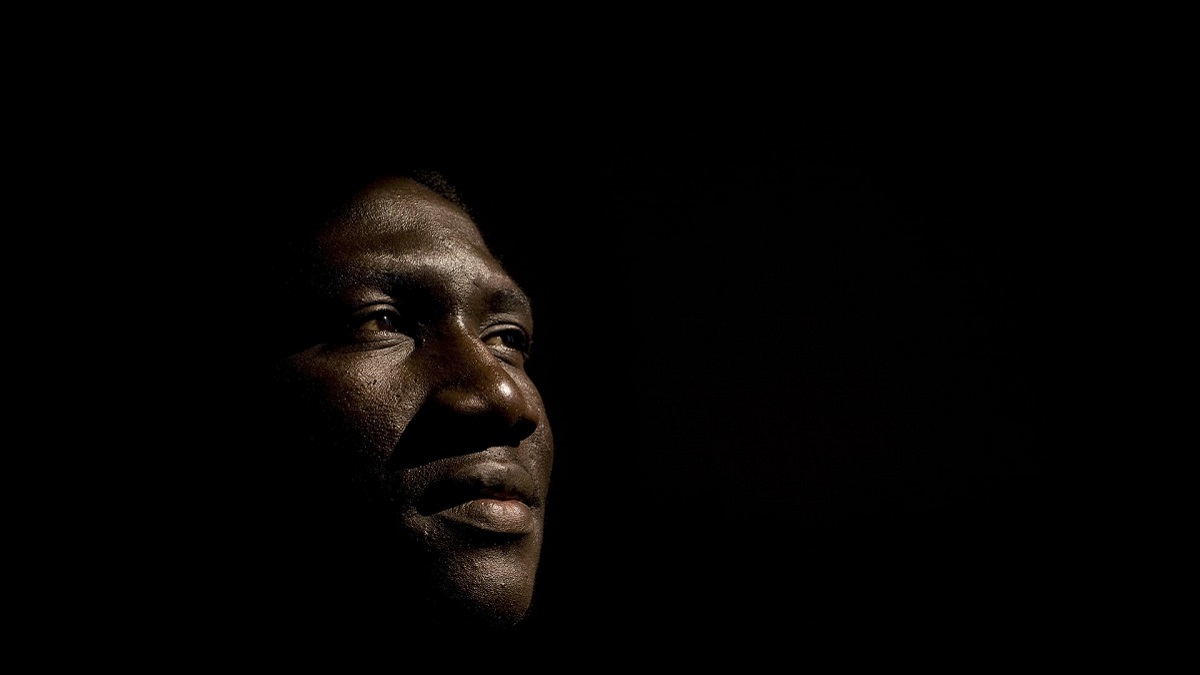
“The real question is: Why would a person rather have an enemy than a conversation? Why would they rather see themselves as harassed and transgressed instead of have a conversation that could reveal them as an equal participant in creating conflict? There should be a relief in discovering that one is not being persecuted, but actually, in the way we have misconstrued these responsibilities, sadly the relief is in confirming that one has been “victimized.” It comes with the relieving abdication of responsibility.”
― Sarah Schulman, Conflict is Not Abuse: Overstating Harm, Community Responsibility, and the Duty of Repair
Consider This: Meditations of A Black, Queer Woman

“If you don’t understand, ask questions. If you’re uncomfortable about asking questions, say you are uncomfortable about asking questions and then ask anyway. It’s easy to tell when a question is coming from a good place. Then listen some more. Sometimes people just want to feel heard. Here’s to possibilities of friendship and connection and understanding.”
― Chimamanda Ngozi Adichie, Americanah
A little Sugar in My Tank: My Black, Queer Agenda

“All struggles are essentially power struggles. Who will rule? Who will lead? Who will define, refine, confine, design? Who will dominate? All struggles are essentially power struggles, and most are no more intellectual than two rams knocking their heads together.”
― Octavia E. Butler
Traslating Blackness Through the Chinese Gaze

“Here they learn the rest of the lesson begun in those soft houses with porch swings and pots of bleeding heart: how to behave. The careful development of thrift, patience, high morals, and good manners. In short, how to get rid of the funkiness. The dreadful funkiness of passion, the funkiness of nature, the funkiness of the wide range of human emotions.”
Toni Morrison
The Black LGBTQI+ Experience in China – Part 2

“Love takes off the masks that we fear we cannot live without and know we cannot live within. I use the word “love” here not merely in the personal sense but as a state of being, or a state of grace – not in the infantile American sense of being made happy but in the tough and universal sense of quest and daring and growth.”
― James Baldwin, The Fire Next Time
The Black LGBTQI+ Experience in China

The eyes are one of the most powerful tools a person can have. With one look, one can relay the most intimate message. After connection is made, words cease to exist – Jennifer Salaiz
 Piquing Duck