
For nine months, between mid-June 2023 and early this year, I quit drinking cold turkey. Inspired by my friend Tatiana, who has extensively documented her sobriety journey (3 years and 7 months sober as of publishing time), I embarked on my own short-lived journey after previous failed attempts. This had come after a few stressful months characterized by much partying and drinking. In my on-and-off love-hate relationship with Beijing’s party culture, nightlife, and the alcohol that is the glue that binds the entire messy and cacophonous mix of people, places, and events, I was exhausted by my seeming inability to just walk away from the stuff.
Just a few short years before and after I had moved to China, it was incredibly easy for me to go without a drink for months, or even years on end. I was a happy social drinker who ordered a drink, not because it was a want or a craving, but rather to blend into social settings where alcohol drinking was almost de rigueur. I met people who had to have a drink and a cigarette to even begin having a semblance of a fun night out. I, on the other hand, was happy to dance alone, sober.
Pandemics and Drink Culture
So, what changed?
COVID-19 and the ensuing isolation and later restrictions led to a lot more alcohol dependency among foreigners and locals alike in China. In Queer chat groups on China’s WhatsApp-like app WeChat, everyone declared that a large part of their quarantine provisions included a large stash of booze that would have to see them through weeks or even months of lockdowns.
There was a palpable anxiety, and a sense of being cut off from the rest of the world, as many understood that if they left the country, they would have to jump through increasingly tightening hoops to return. And as we all learned, many of those who made their “escape” at the start of the pandemic were stuck in their home countries or third countries for months or years on end.
This phenomenon was hardly restricted to China. An increase in alcohol consumption during and after the pandemic was noted worldwide and is expected to have long-term effects of alcohol addiction, and even an increase in cancer rates in the next decade or so, according to health experts. The UK alone recorded a 33-percent jump in alcohol-specific deaths in 2022 compared to 2019, with Scotland and Ireland recording more deaths than England per capita, The Guardian reported in April.
Several countries across the world limited the sale of alcohol to discourage clandestine socializing amid the pandemic, while off-licenses remained open in the UK, contributing to increased alcohol purchases and high-risk drinking. Likewise, thanks to a well-developed Waimai or grocery delivery system, even with stringent lockdown directives in place in certain parts of China, many still had access to alcohol through shopping and food delivery apps.
― Anthony Kiedis, Scar Tissue
However, even before the start of the pandemic, there was already an existent culture around drinking among China’s expat communities, borrowed from the Chinese culture of social drinking. China is big on ganbei culture, which literally translates to “empty cup.” With its own locally-produced and much-revered baijiu or rice liquor brands, ganbei drinking culture is widely celebrated and present at any social gathering amongst friends and family. One person at the table calls for those with their glasses fully charged, to down the contents in one – like one would a shot of tequila.
Additionally, an ethos of work hard play hard means that, in matters going out and drinking, many young Chinese people – whether straight or Queer – happily indulge in the excessive consumption of alcohol. Among expats living in China, alcohol is touted as a way to survive unfamiliar, often highly stressful social and work environments. Restaurants, eateries, and high-end clubs, also give special offers to entice expats, from bottomless wine nights to complementary table service at more high-end clubs.
Many end up stuck in the revolving door of working all day and partying all night, with some doing this every single day despite punishing work schedules. This is particularly notable among Queer expats living in first-tier Chinese cities like Beijing, Shanghai, and Guangzhou. Fueled by a need to find community in a foreign, often isolating land, they coalesce around local watering holes or organize events centered around drinking, creating a dependency of sorts.
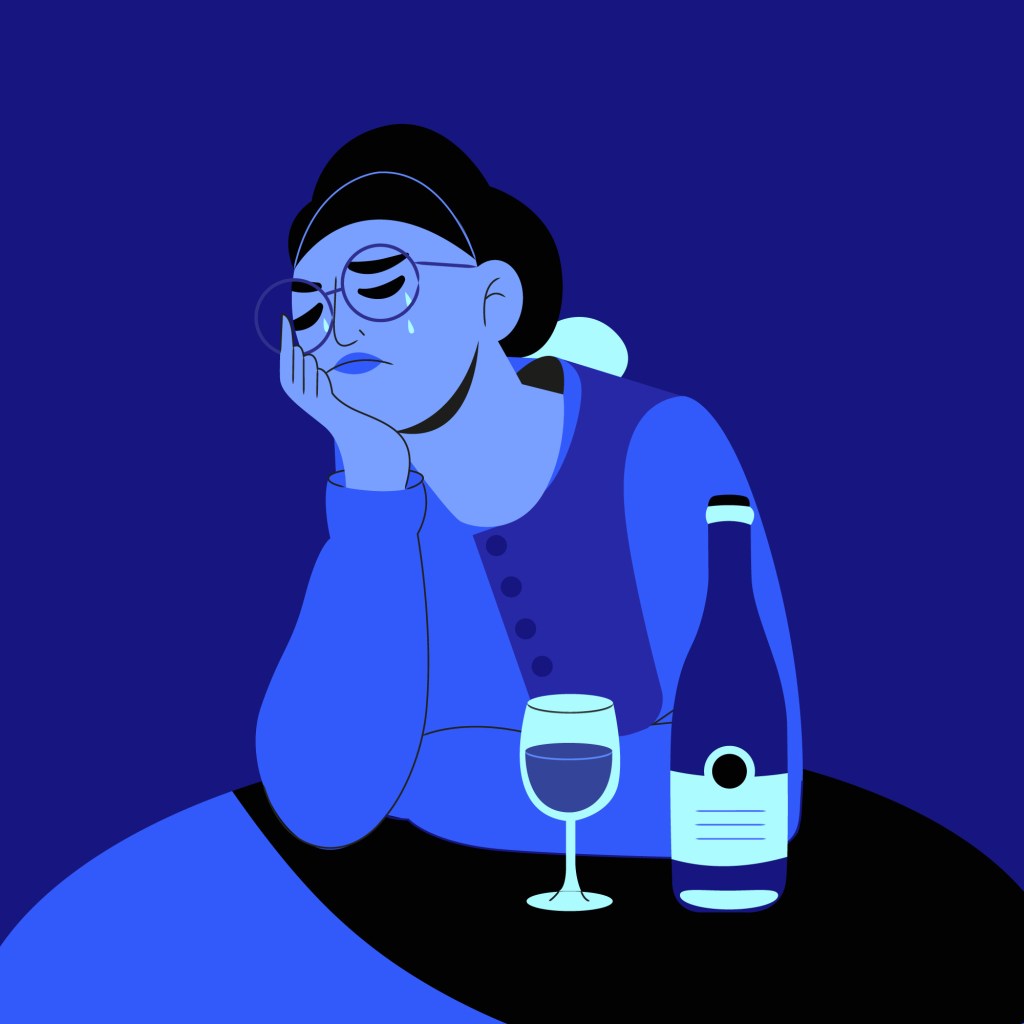
Alcohol, a depressant, might end up exacerbating symptoms of depression and loneliness, often acutely experienced by vulnerable groups such as LGBTQIA+ individuals, especially those living far away from home. Research confirms that alcoholism or moderate alcohol dependency is indeed a problem in the LGBTQIA+ community.
Read More:
- Rights Bulwark: Int’s Campaigners, Organizations Brace for Second Trump Term
- Drinking Ourselves to Death: Alcoholism and the Queer Community
- Pride Flags and Black Eyes: Intimate Partner Violence in Queer Relationships
- Hiding in Plain Sight: What We Have Missed About State-Sponsored Homophobia
- Justice Denied: Steven Kabuye Remains Committed to Human Rights Fight Months After Horrific Attack
Spaniard Pablo, a Gay man living with his Chinese partner in Beijing has a different take. Having arrived after zero-COVID restrictions were lifted nationwide, he has a markedly different experience with alcohol consumption in China, especially when juxtaposed with the drinking culture in his home country of Spain.
“Since moving to China, I’ve noticed that drinking at home is more normalized, and I’m not just talking about a glass of wine or a beer, but also heavier drinks,” he explained, adding “Back home, a typical Saturday night might start with dinner at 10 pm, followed by drinks at a bar from midnight to 2 am, and then heading to a club until 6 or 7 am. In China, clubs often close at around 3 am, and mixed drinks tend to be more expensive compared to my hometown, though not necessarily more than in bigger cities like Barcelona or Madrid.”

― Craig Ferguson, American on Purpose: The Improbable Adventures of an Unlikely Patriot
Admittedly, his own consumption has shifted since moving to China, with Pablo developing a taste for lighter Chinese beers often packaged in larger bottles compared to the West. However, the lack of a similar social drinking culture as Spain has led to an overall reduction in alcohol consumption, an interesting twist as his partner owns a fledgling drinks and events organizing business. “I think my reduced enjoyment of China’s nightlife, combined with going out less frequently, has naturally led to a decrease in my consumption of stronger drinks, which I typically associate with clubbing,” Pablo explained.
Conversely, after being off the drink for a while, American Michael, another Gay man living in Beijing, is navigating a new sober curious reality. Several factors, both personal and psychological led to Michael’s decision to quit drinking. After months of therapy, he felt more like himself and was not using alcohol as a crutch. But lately, he has been incorporating mild social drinking into his social interactions.
“I have been drinking on occasion. But not as stress relief, but I do give myself a strict two-, sometimes three-drink limit,” Michael explained. The sober curious movement has been gaining momentum since the 2010s and does not advocate for no alcohol consumption, but rather mindfulness and awareness by those who want to either quit drinking or drink responsibly. Be it for social and health reasons, seeking community and support, or simply reducing alcohol intake, there is an increased awareness about alcohol and its negative effects, with many hoping to mitigate them.
Sobering Figures
A staggering 25 percent of the general LGBTQIA+ community suffers from moderate alcohol dependency compared to less than 10 percent of the general population. Among them, Bisexual women were found to have the highest alcohol dependency. More alarmingly, alcoholism has become more normalized in the LGBTQIA+ community.
Unsurprisingly, LGBTQIA+ people suffer high rates of minority stress in a country as homogenous as China. Not only are they foreign, but they are also Queer, doubly alienating them from the larger society, both local and international. Language barriers, unfair treatment at the workplace, cultural misalignment, overt or covert acts of racism, and homophobia, all conspire to create feelings of depression, anxiety, anger, low self-esteem, suicidal ideations, and shame in those who face such societal pressures.
The issue of alcoholism in the LGBTQIA+ community is hardly new, with articles and books on the subject being published as far back as the 1970s and 1980s. They all noted that, due to the socialization of Gay men and Lesbian women in particular, who would only feel comfortable expressing themselves in bars and similar social settings, alcohol became part and parcel of Queer culture. Alcoholism was such an acute problem even back then, that it led to the establishment of LGBTQIA+-specific Alcoholics Anonymous chapters across much of North America.

― Joan Didion, Blue Nights
The book The History of Gay People in Alcoholics Anonymous: From the Beginning by Audrey Borden tracks the evolution of AA in North America, and LGBTQIA+ individuals who were instrumental in the organization’s initial success, going as far back as the 1930s. Twelve-step programs and quitting cold turkey remain the two most widely used methods by those with alcohol dependency to quit the drink. Although hospitalization and the use of pharmacological interventions may be used in acute cases of alcohol withdrawal or long-term dependence.
China also has several AA chapters in some of its larger cities offering counseling for those wishing to quit drinking, though many of the group counseling sessions are offered in Putonghua (Mandarin Chinese), creating a language barrier for foreigners with low language proficiency. Moreover, overall fear of social stigma from friends and family inhibits people from seeking the help they need.
So, is there a way forward for those who wish to get off the Ferris wheel of highs and lows associated with regular alcohol consumption? Unfortunately, there is no way around it but through it. Setting goals and preparing for change; cutting back alcohol consumption or quitting alcohol altogether; and considering alcohol addiction treatment options are just some of the approaches advocated as being most effective in quitting alcohol, that is until a magic pill is someday invented to make putting down the drink that much easier for the sober curious.
Photos: Created using Freepix, Unsplash
 Piquing Duck