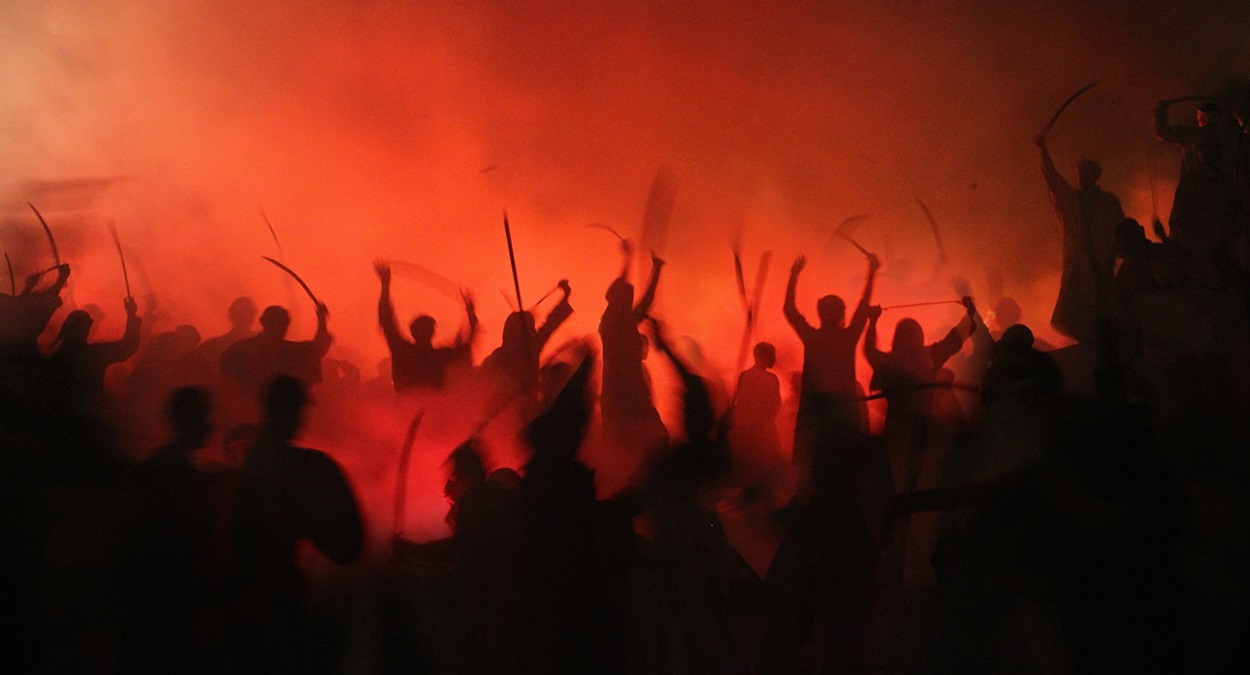
The internet has discovered the Sudan and Congo!
By that, I mean that the TikTok and Instagram algorithm gods have finally seen it fit to lead the internet faithful toward a path of the de rigueur pilgrimage of wanton carnage and suffering, by way of the stations of the cross of war. Along with the Israel-Palestine conflict that has so rightfully been decried by nations and netizens the world over, conflicts in Eastern and Central Africa have also warranted a mention, featuring in the litany of deplorable under-the-radar wars “that no one talks about.”
No one, however, is a loaded term in itself. Those affected by the conflict in the Congo and Sudan do indeed talk about it, and may be so ad nauseam, as a part of everyday life in a cycle TikTok psychologists may call “normalizing patterns of trauma.” For starters, the DRC conflict has taken on different permutations over the nearly five decades of unrest in the country since the assassination of Patrice Lumumba and the ascension of the Kabila political dynasty. From Westward pushes, to contained regional skirmishes, to cross-border skirmishes between it and Rwanda and large-scale nationwide conflicts prompting the involvement of international peacekeeping missions, the DRC has been in the throes of bloody struggle far longer than many Africans care to remember.
As for Sudan’s nearly year-long conflict escalated on April 15, as a result of a derailed transition of power, large Western media outfits, including the BBC, Al Jazeera, and CNN followed the unfolding saga on the ground and interviewed locals and diasporic Sudanese in the country and abroad at the time. The latest conflict, as they rightfully pointed out, was not an isolated incident, but the result of waring military factions looking to take over control of Sudan (proper) after the splitting of Sudan into Sudan (north) and South Sudan, the latter of which was as a result of running battles with the Arab-controlled north.
It will be remembered by those who have followed not only the conflict, but the birth of the nation of South Sudan, that shortly after taking power as the first President of South Sudan, leader of Sudan People’s Liberation Army during the Second Sudanese Civil War Dr. John Garang de Mabior was assassinated. His assassination ushered in yet another period of decade-long unrest in the newly minted nation.
Incidents across Africa have, from time to time, reignited interest in the continent’s bloody contemporary history spanning over the last 70-odd years. Border crossings through Libya, for instance, revealed a cruel underworld of modern-day slave trade, and further harkened global memory to the ouster and subsequent execution of Muammar Gaddhafi, at the time believed by American intelligence, security forces, and ruling body all, as the distillation of pure evil in Northern Africa.
― Octavia E. Butler, Parable of the Talents
Pirate raids on international freight ships along the stretch of the Indian Ocean abutting Somalia’s extended coastline also, the morbid fascination of which resulted in the production of a movie Captain Phillips featuring Tom Hanks, called back failed US-led interventions at quashing a civil war in the Horn of Africa, that would lead to mass displacement, and the birth of Al-Shabaab, a terror organization assisted by the Al-Qaeda terror outfit that orchestrated coordinated bombings in American Embassies across East Africa, and may have portended the events of 9/11.
Most prominent among these public media-induced global reckonings was the Bring Back Our Girls campaign after the Chibok 276, schoolgirls kidnapping, 98 of whom are still being held nine years on, in Northern Nigeria by Boko Haram, an Islamist militant organization based in northeastern Nigeria, and active in Chad, Niger, and northern Cameroon. The campaign was spearheaded by the glitterati of Hollywood’s A-listers who somberly posed behind white sheets of paper inscribed #BringBackOurGirls. Most prominent among global figures was former first lady Michelle Obama. The incident fostered discussions about Nigeria – and by extension, much of West Africa’s – legacy of regional, tribal, and religious conflict, spanning decades and many bloody massacres. Writer Chimamanda Ngozi Adichie is just one of the many writers to capture the horrors of such historical wars in her book Half of a Yellow Sun, in which she gives a semi-fictional account of the Biafra War.
Activism – A Retrospective
For whatever reason, these and not a plethora of other wars, conflicts, struggles, and injustices across the world, have captured the attention of the global conscience, albeit momentarily. The proliferation of social media has certainly played a part in the universalization of struggles, making them more immediate and relevant information more readily available. However, long before our present-day social media-amplified causes, the global conscience was still made aware of and rallied behind causes.
Long before the UK outlawed the Transatlantic slave trade, abolitionists set about galvanizing public support for the abolition of slavery in its entirety and demanded for the freedom of enslaved masses in British territories across the Caribbean and the Americas. In Bury the Chains: The British Struggle to Abolish Slavery, Adam Hochschild writes: “In November 1787… Activists in Manchester were getting up their petition; … articles against slavery were starting to appear in newspapers. The up-and-coming artist George Morland was about to exhibit the first antislavery painting, at the Royal Academy no less: Execrable Human Traffick showed a protesting African being hustled into a ship’s longboat by white traders. Even a new children’s book, Little Truths better than great Fables, included a description of slaves in a ship ‘pressed together like herrings in a barrel, which caused an intolerable heat and stench.’”
Likewise, despite the decidedly virulent form of racism that had taken hold of the American territories, White abolitionists attempted to galvanize support for the abolition of slavery in the US, succeeding in affecting public sentiment and effecting the passing of more progressive laws in certain states – a stance that would eventually lead to the US civil war.
Nearly a century later, it was the cause of war refugees from Europe looking to call different places home after World War I, and after it was the plight of Jewish refugees escaping the horrors of a Nazi-orchestrated extermination campaign amid growing antisemitism in much of Europe. Soon it would come time to advocate for the independence of African states still under the yoke of colonialism as many across the world valorized the actions of freedom movements across the continent, from the MauMau in Kenya to Nkurumah’s efforts in Ghana.
The 1950s also brought with them a swell of anti-war sentiment as people from the US to the UK opposed the Korean War, and would soon extend similar opposition to the Vietnam War. Then came a concerted global effort to see an end to apartheid rule in South Africa, with the citizenry in the US and the UK calling for sanctions to be placed on the apartheid government and a cessation of diplomatic relations until such time when Nelson Mandela would be released from unlawful incarceration.
Liz Sonneborn writes in The End of Apartheid in South Africa: “The violence in South Africa not only troubled the international financial community; it also stirred a sense of moral outrage in people around the world. In the United States, concerned citizens denounced apartheid and pushed for U.S. companies to remove, or divest, all their funds in South Africa as a means of pressuring the government there to reform. College students especially embraced the divestment movement, while many church groups, especially in the African-American community, lent their support to the anti-apartheid cause.”
Many more causes were taken up nationally and internationally, including the Suffrage movement, which, while fighting for the right of women to vote, also sidelined Black women’s plight in the US, or how WWII anti-war efforts led to a rise in anti-Japanese sentiment the placing of Japanese Americans and Japanese refugees in internment camps across the US.
For better or worse, international activism has yielded worthwhile results and changed the face of human rights forever, normalizing in the greater public conscience, philosophies and outlooks that were once considered fringe and far too radical, from racial and gender equality to gender and sexual minority rights. Whether, however, the causes were taken up by activists because they were part of an in-group, or felt directly or tangentially affected remains an unanswered question.
Research suggests that being part of a directly or tangentially affected group or sharing an identity with those affected by a particular issue does not influence people to join or support causes. It is, however, the core group identity and existential threats to the same that inspire members of a society to join and support a cause. The West, for instance, has positioned itself as a bastion of political and religious freedom, with societies catering to individual liberties. Any attack on the same at home or abroad sounds a social alarm that rallies social justice warriors to action.
Amplified by social media, and the notion of a collective identity, it becomes the de facto duty of every social media user to claim and champion a cause, not only for collective posterity but also for individual preservation in the harsh social media landscape. New to the global social justice movement, is the infallibility litmus test that violently purges anyone believed not to be a philosophical purist in relation to a particular movement, additionally labeling them as complicit in the collapse of Western-claimed values of absolute liberty and equality, and paradoxically giving rise to cancel culture and rage farming.
Read More:
- Welcome Change: Vatican’s Move to Bless Same-Sex Couples a Sign of Inclusivity Push by Pontiff
- Gospel of Hatred: Recipe for Fatal Trust and Regressive Revolutions
- Pink Camouflage – The Pinkwashing of the Israel-Palestine Conflict
Like a Religious Calling
It is now accepted that, to be truly taken seriously by those who have platformed them, internet intellectuals must show agility in creating awareness about the right issues at the right time, while remaining piously observant of the canons and tenets of language orthodoxy lest their message be corrupted with outdated and harmful terms, whose only real harm is arguably to shift focus from the message while planting a bullet smack dab in between the messenger’s eyes. Each messenger of the word, however, swears to their church of disciples that it was incumbent upon them to show the way and the truth – each post is a great leading-out.
The creation of awareness should also follow certain standard TikTok proselytizing. One must be confident, fairly well-spoken – the faster the better, and display an overwhelming incredulity at the “fact” that the “world” isn’t paying “enough” or “any” attention to “this!” A definition of terms, by design, is not included due to the finite amount of time one has to stand on the global pulpit to spread the word before being summarily dismissed by unbelievers and agnostics in one fell swoop; or shall we say foul swipe? “This” is a placeholder for any and all matters close to the heart that have, are, and will continue to be revealed by the algorithm gods throughout the space-time continuum.
Mainstream media is also the enemy regardless of whether said media establishments across the world have brought periodical –although admittedly limited- attention to the cause now turned hobbyhorse by the algorithm justice crusaders. They are complicit in the silencing of the revelation, and in short order, media cult zealots are exposed for their deplorable opining on this and similar crises over the years. This then bleeds into the YouTube scribes who pore over any and all available [there is always some available and often not hard to find] resources and information, crafting long-winded sermons, much like old-world documentaries, but these have the stamp of personalized approval, for the scribe fancies themselves a principle learner in this exercise, and therefore, while open to correction, is above reproach.
Those who choose to use this avenue to inform the world have no choice but to be right, and those who come after them, building on the already established formula, have no choice but to dismantle the thinking of the erstwhile prophet proclaiming to have distilled the essence of truth, and on the ashes of a potentially ruined TikTok career, they hold up the tablets of the real truth – missing context, nuanced argument, the use of ALL the correct phrases and appropriate up-to-the-minute terminology.
Certain aspects, are to be avoided, however. Using the Colombus-esque technique perfected by institutions of governance over centuries, it is important for the creator to present themselves as an innovator – the first in a long line of prophets to come to receive an almost divine revelation. Newness, here synonymous with silence as a concept, is now entirely dependent on a subject’s proliferation on a platform as opposed to the consideration of how long it has been part of the greater social, political, and economic conscience. It matters less that large masses are passively, or indeed actively, aware of a current or past situation, as much as it does to introduce it as a new concept – not to a platform – but to the universal conscience as defined by the use of social media. Do you not have #BLM #LGBT Lives Matter on your socials bio? What are you, some kind of racist homophobic bigot?!
So Where Does That Leave Us?
Justified righteous indignation aside, internet intellectuals misdirect their anger toward those on the receiving end of continued information manipulation and withholding, rather than aiming it at the sources of it. The cry “educate yourself” rings hollow hotly tripped over the lips of the admittedly neo-educated, especially in a system that allows for no testing of the depth and breadth of knowledge, aside from, of course, public defenestrations from the dizzyingly tall heights of the tower of algorithmic piecemeal information for the crime of imperfect articulation.
Michelle Wrong, for instance, who has an impressive body of biographical and historical work on conflicts across Africa and the rest of the world, might be dismissed today for her race, her gender, a lack of inclusivity in her writing – which in itself might take a multi-pronged form of admonishment-, or her status as a first-world citizen capitalizing on the misery of others through her writing.
― David Smail, Power, Interest and Psychology: Elements of a Social Materialist Understanding of Distress
Read about the people as written by the people – a fair rejoinder. But who is the arbiter of the “natives” worth reading, or is everything written by a native the gospel by dint of their ties to the land and the conflict by extension? Those brave enough to vouch for this native writer’s work over that of others may, themselves, be deemed unworthy of making such judgments due to stringent positionality criteria, even if they fit other key vectors like gender, race, ethnicity, or religion. You are still an American darling, and from this angle, we see no difference.
And to the accusation of individual or collective profiteering, do we not all stand guilty of this charge? Without resorting to moral equivocations, how can one justify the use of platforms, themselves models in successful capitalist profiteering in a capitalist market, to spread awareness about the evils of war, much of which we are warned is also a result of the global capitalist industrial complex, while the platform itself incentivizes content creators monetarily and with notoriety?
Moreover, without the active engagement of content creators and followers alike in certain topics, they are soon swept off the platform’s bidding block, losing out to more current, seemingly more pressing topics de jour. Platforms built for the sole purpose of boosting and maintaining high levels of engagement, however, have no built-in incentive to continue suggesting topics no longer in vogue once those in dominant social media echo chambers suffer from apathy from overexposure?
It is also curious that countries at the forefront of championing international causes would have walking breathing representations of the same causes and still remain so blithely unaware of the horror those who stand before them and walk among them have endured and escaped, only standing as testament to the utter success of the Western nation-state’s narrative of being a bastion of melting-pottery or cohesion and harmony. Of course, it would be unthinkable to expect those who escaped the ravages of war to narrate their experiences upon each acquaintance, but it is equally strange that societies that pride themselves as welcoming so openly shun any mention of strife from their new residents.
Those who seize on these nuances use them as weapons against those who have escaped, calling on them to return to their war-torn hellholes at the first sign of impudence or mutinous self-expression not true to the “grateful to be here” handbook one would assume all refugees are handed once they reach the shores of the promised land of peace and prosperity. The treatment of actual members of Congress like Ilhan Omar, a refugee from Somalia via Kenya to the US, is a warning that no heights are beyond the reaches of ivory tower denialism and collective incrimination.
So this is the result. The paradigm essential to the advancement of the global village script has shifted from “yes, and…” to “yes, but…” bringing the entire production to a grinding halt. This ushers would-be players and has-been actors stage left as they exit the euphemistic global stage, while those deemed fit to carry on with whatever form of dialogue is left, cautiously position themselves before an enthralled audience, carefully repeating the same lines over and over again, adlibbing when needed and dependent upon positionality, hoping that the audience will not only notice, but applaud this brave and safe artistic choice.
To put it bluntly, online rage won’t save the Congo; TikTok activism won’t bring resolution to the crisis in Sudan. Those forever “discovering” despotic regimes and war crimes perpetrated by the hallowed West are bound to never run out of crises to discover, to evangelize about, for which to demand change, but most importantly, they will forever be the butchers of the internet forever throwing red meat to the algorithmic beast that demands to constantly be fed regardless of whether the result of lasting change or collective myopia.
Photos: Unsplash
 Piquing Duck
One thought on “Op-ed: Algorithmic Justice Won’t Save Sudan and DRC”