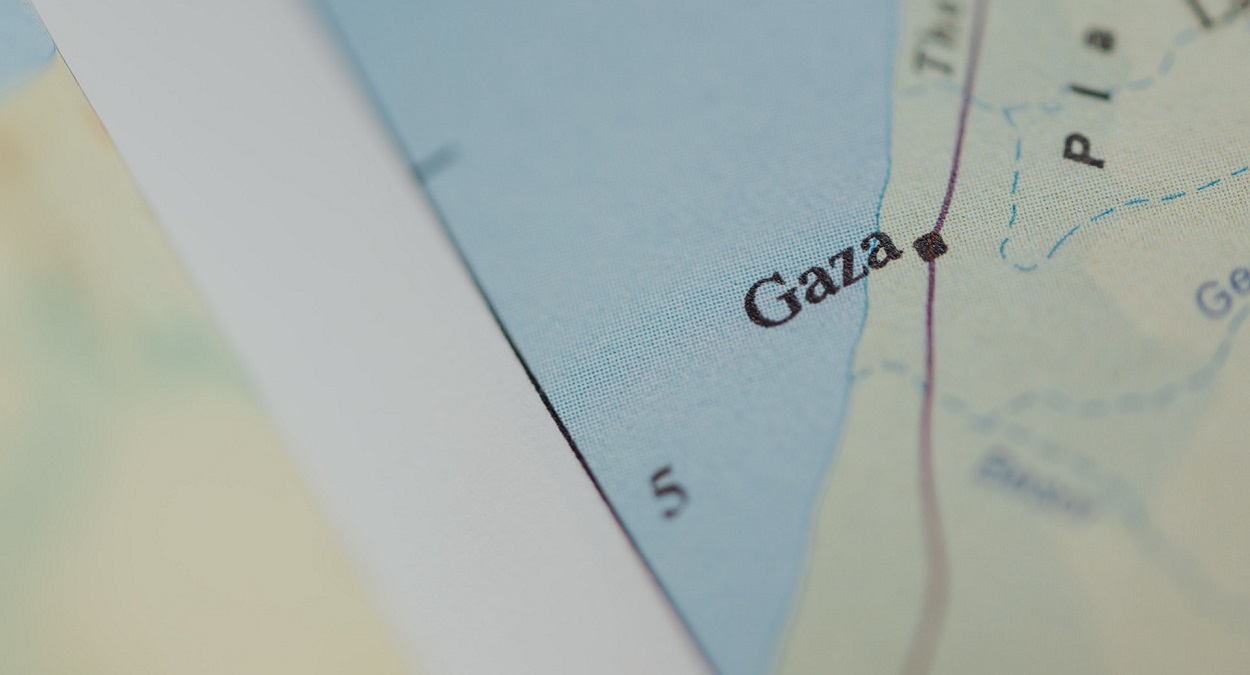
The ongoing Palestine-Israel conflict, which has claimed more than 17,000 Palestinian lives, has galvanized much of the world to call for an immediate ceasefire if not an immediate end to what many have termed as Israel’s disproportionate response to the October 7 attack by Hamas. At a recent UN Security Council meeting, the US vetoed a draft motion on a ceasefire, leading to global condemnation and a call to reform the structure of the Security Council, including the revocation of Security Council permanent members’ veto power.
The unprecedented loss of life has called international attention to the plight of Palestinians who have been living under what is effectively an apartheid Israeli state as pointed out by numerous Jewish scholars including Norman Finklestein, Noam Chomsky, and Gabor Mate, highlighting the history of Zionist settlement in the region pre- and post-World War II.
While the attacks perpetrated by Hamas in the name of Palestinian independence have been widely condemned, much of the pro-Israeli rhetoric seems to conflate Hamas and Palestinians in Gaza, representing both as one and the same, despite the latter being a people sequestered by a fully militarized and alleged nuclear world power, and the former being termed a terrorist organization.
Hamas’ actions, though deplorable, have also been characterized by some as a consequence of Israeli occupation, and a natural part of armed resistance in the fight for freedom as seen in liberation movements around the world in modern history, especially during African countries’ fight for independence, and in particular, South Africa, where the actions of the more militant parts of anti-apartheid campaigners engaged in armed resistance against the then apartheid state.

― Noam Chomsky, Gaza in Crisis: Reflections on the U.S.-Israeli War on the Palestinians
Such sentiments have widely circulated on social media platforms, especially on X (formerly Twitter) where discussions and debates about the October 7 attacks and Israel’s subsequent counter-offensive in Gaza have been particularly heated, with some claiming any criticism of Israel’s actions is anti-Semitic, while others have labeled Israel a genocidal state as seemingly indiscriminate bombing of Gaza continues.
The legacy of terrorist organizations, most of which took root in the Middle East has, however, complicated matters, and a recent history of anti-terrorism in the West has meant a blurring of the lines between legitimate liberation movements and terrorist activities. This is further compounded by the fact of a casual anti-Middle Eastern racism that tends to dismiss any form of action on the part of those considered to be of Arab descent as terrorist activities, especially when directed at Western hegemonic powers.
In his book What is Anti-racism? And Why It Means Anti-Capitalism, Arun Kundnani, author and adjunct professor at New York University, gives an in-depth historical reading and analysis of Western Racism and Islamophobia cloaked in Arab-focused anti-terror activities. He offers the often undiscussed example of the Netherlands’ opening of Algemene Inlichtingen- en Veiligheidsdienst (AIVD), a high-security prison unit modeled after the American prison system, for the explicit detention of Muslim terror suspects under the Dutch counter-terrorism system. Kundnani’s reading of how much of the West views racism, especially anti-brown and anti-Black racism comes into focus in the Israeli-Palestinian conflict discourse seen over the last two months.
Kundnani writes: “Anti-Muslim racism is therefore indispensable to the War on Terror. Only by imagining barbarism as somehow a natural feature of Islam can government agencies present war, torture, assassination, and arbitrary imprisonment as necessary. Anti-Muslim racism functions by setting aside all the contingent social and political factors that create the conditions in which some Muslims do indeed commit terrifying acts of violence and, instead, seeing their actions as simply the automatic expression of an Islamic culture of fanaticism. We can then tell ourselves that their violence reflects the deep flaws of their culture while our much greater violence is a rational, even liberal, response, aimed at modifying their barbaric behavior. Genocidal violence does not always announce itself in the rhetoric of overt hatred; it can also be hidden by the managerial language of cultural reform.”
Read More:
- Gospel of Hate: How Uganda Became an Ideological Battleground
- Red, Yellow, White, and Blue: How the Vietnam War Shaped US and Global LGBTQIA+ Rights Discourse
- Hollywood Inclusivity and African-South Asian Queer Visibility
Despite this legacy, a tidal wave of change has emerged among the global youth, especially those who came of age in a post-9/11 world and experienced first-hand countries like the US expend considerable resources in rooting out the evil that was terrorism, leaving a trail of failed states and a world no safer than before such efforts were made. Libya and its open-air slave markets, Afghanistan and the Taliban’s claim to governing legitimacy, Iraq and its sluggish recovery, Syria and a never-ending war amid mass flight to Western Europe; all these have been glaring examples of the Western-led response’s failings in tackling perceived terrorism.
In those same years, much of the West adopted more inclusive legislation that sought to protect gender and sexual minorities, offering them the same rights as heterosexual citizens, including granting the right to marry and enshrining protection against discrimination on the grounds of gender or sexual identity. Israel, a secular and Western country remains the only country in the Middle East to declare protections of gender and sexual minorities and is the only country in the region to recognize same-sex unions, though legalization of the same has had numerous failed attempts. Despite this, Israel has been held up as a bastion of freedom and human rights promotion, despite growing discontent among more conservative elements in the country who openly call for a scrapping of such protections by law.
In a Washington Blade article published on November 2, 2022, titled Israel Election Results Could Prove Disastrous for LGBTQ Community, the author warned “It is already clear that LGBTQ representation in the Knesset will decrease” after elections that saw extreme far-right politicians throw their hats into the ring. It also went on to warn that previous gains made by the LGBTQ community the previous Knesset would be in danger, from Gay men being allowed to donate blood to the approval of surrogacy for male couples and much more. “The far-right’s goal of reforming the justice system could also hurt LGBTQ achievements, some of which resulted from Supreme Court decisions. The legislation of the Override Clause will give the Knesset the authority to re-enact a law that the High Court has invalidated, thereby overruling Supreme Court decisions,” the article read.
It is also because of Israel’s public stance on LGBTQIA+ rights thus far that many in the community have declared their pro-Israel stance. Beheadings committed by Hamas of suspected Gay men have been pointed to as a reason why Israel must be protected, for without Israel, gender and sexual minorities in Gaza and the West Bank run the risk of brutal extermination at the hands of Islamist Hamas.
What this argument, however, fails to take into account is increased bigotry within Israeli society, long bedeviled by racism, Islamophobia, anti-miscegenation, Christophobia, and homophobia. Many of these prejudices have not only been publicly spewed by political and religious leaders in the country but have also been extensively documented as in the case of Yemenite children forcibly separated from their parents and adopted by wealthy Ashkenazi Jewish couples and the forcible sterilization of Ethiopian Jewish women on account of their race.

― Noam Chomsky, Gaza in Crisis: Reflections on the U.S.-Israeli War on the Palestinians
Much like in Western countries where there are laws meant to protect such minorities, there has been an escalation of homophobic attacks in recent years, similar to those witnessed in Western Europe, and an increase in Transphobic-motivated murders in the US. Laws, one might conclude, are far from the only thing needed to protect an entire class of minorities in a country. Indeed, a willingness by the rest of society, which holds most of the legislative and brute power to inflict harm on said minorities is also needed, and at present, it seems that the humanistic approach is waning in Israeli society.
Moreover, a successful pinkwashing of recent history by much of the West has divorced the notion of homophobia from the Western conscience, considering it anathema to “civilized” society when, not long ago, much of the West was vehemently homophobic, with draconian punitive laws set in place under the pretext of religious observance, as is currently the case in Muslim countries that prescribe to Sharia law.
The legacy of this Western religious-based legislation of bodies and sexuality is still seen all around the world in countries in Africa and Asia, where laws set in place by former colonial masters against homosexuality are still enforced, and in the case of some, have been made even more punitive. And it was in those same homophobic societies that the concept of allyship, a term now widely used to identify those who support minority causes, grew and set the foundation for Queer activism.
Far from a purely Western concept, allyship is universal and is seen even in the most homophobic and punitive of societies. Those who have survived historical periods of great oppression backed by totalitarianism, be they in post-World War II Soviet Union, or present-day fundamentalist Christian African governments in countries like Uganda, have spoken to this fact. In tightly-knit ethnic societies, even with the seeming outward deniability of homosexuality by straight-passing individuals, one’s community knows and it is they who choose to look the other way, or directly support the individual – both of which are elements of support in such societies, though the former would be considered silence in contemporary LGBTQIA+ advocacy. Far from dangerous, silence means that which is abhorred cannot be conjured or confirmed as existing, keeping those likely to be labeled or outed safe.
The homophobic acts of a terrorist organization cannot be used to define an entire society, just as declarations made in the name of a deity or a people do not directly reflect the thoughts and sentiments of said god or people. An insistence on representing the acts of a terrorist organization as the actions of a collection of millions also plays into the historical ease with which the West denies Brown and Black autonomy and agency by lumping racialized into easily definable and therefore dismissible categories based on race and religion.
Such a dismissal has also been showcased by calls from Israel and pro-Israel factions for other Middle Eastern countries to take Palestinians in because of perceived similarities, without acknowledging that outside the commonality of religion, itself splintered into contentious factions, Middle Eastern countries all have unique cultures and systems, and are not a one-size-fits-all deal.
Homophobia makes the conflict personal for many LGBTQIA+ people across the world who have to weigh their individual identities against the collective good of society. More individualist concerns, we are wont to believe, are incongruous with collectivist struggles, but it is important to remember that even the fight for gender and sexual minority recognition and protection in the West was that of collective struggle, and continues to be so in countries where such rights are being eroded even further.
What is most important, however, is that for LGBTQIA+ individuals in Gaza and the West Bank, collective punishment meted out by Israel is no more a saving grace than a beheading by Hamas. Both lead to death. One of these demises has, however, been sanctioned as a legitimate consequence of self-defense. And even in times of relative peace, are we to believe that the curtailing of their freedom based on being Palestinian by Israel is acceptable in itself? And how long are such people to be doubly oppressed by an Islamist terrorist organization out for their blood, and a Zionist settler state out to dispossess and sequester them?
Photos: Mohammed Ibrahim, Gayatri Malhotra, CHUTTERSNAP via Unsplash
 Piquing Duck
3 thoughts on “Pink Camouflage – The Pinkwashing of the Israel-Palestine Conflict”