
As one of the most unpopular wars raged in Southeast Asia galvanizing anti-war sentiment both in the US and abroad, Vietnam would inadvertently usher in a new era in sexual and gender minority activism, and transform the LGBTQIA+ movement not only in the US but in much of Southeast Asia.
The US, a country known for its militaristic might, and its extensive involvement in wars around the world, has also shaped the cultural landscape and linguistic orthodoxy when it comes to the fight for human rights. Such parallels are inescapable in the language used in the discourse around the recognition of racial, sexual, and gender minorities domestically and internationally, and political and ideological debates characterized by warlike terminology – a fight for rights, a bat; a battle for the hearts and minds of America; a victory for Gay marriage.
The Vietnam War, initiated by the US in a bid to push back communist forces gaining ground in Southeast Asian countries like Laos, North Vietnam, and Cambodia, marked a turning point in the visibility of Gay men in the US, as it also introduced rigid concepts of American hetero- and homonormativity to a society in which such concepts didn’t exist.
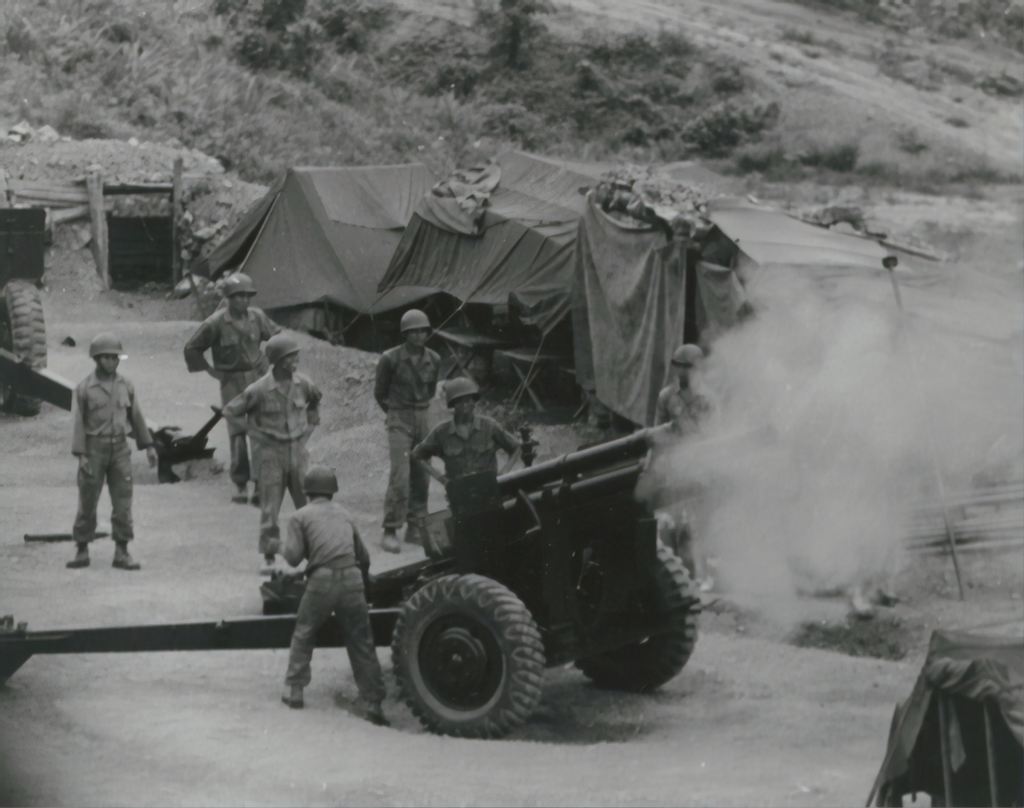
Hollywood had, in the lead-up to the war, worked to cultivate the racialized image of the all-American man, modeled after John Wayne, and embodied American values of unwavering patriotism, courage, Christianity, and heterosexuality, as it had the image of ideal American womanhood as the white “girl-next-door” still used as a quotient in American attractiveness to this day.
This concept of masculinity would not only go against the reality on the ground in Vietnam, a country in which Trans identities were openly tolerated if not accepted, and much like other parts of East Asia then and now, third-gender individuals occupied a special place in society as spiritual conduits and priests. Moreover, same-sex attraction and intercourse had yet to be pathologized, but rather existed as part of one’s idiosyncrasies – something one did and not who someone was – and was tolerated as long as one met their social obligations to their family e.g. procreation.
Pushed out of the Closet
Then at the height of its post-WWII conservatism, the image of a strong America was bolstered by the image of strong masculinity. Homophobia was an integral part of the macho American man image and extended to the US military, especially in conscription and recruitment of new soldiers for its war efforts.
Thanks to nearly a century of the demonization of Homosexuals in top positions of leadership in Europe, including in the military, and the subsequent use of the “homosexual scare” tactic that was birthed by WWI and scrambles for power in Europe, including the birth of the Nazi movement in Western Germany, but also the simultaneous union of the Communist movement in North America with early forms of LGB rights activism in the 1930s meant that Homosexuals were not only hated and feared but were widely believed to be a liability to the military and susceptible to defection and the trading of state secrets.
“Central to this fear has been the sense that Gay people, by virtue of the secrecy once intrinsic to their existence, operate through subterfuge,” wrote James Kirchick in his detailed article titled The Long, Sordid History of the Gay Conspiracy Theory for the Intelligencer, adding: “The American penchant for associating sexual and gender nonconformity with political malice dates at least as far back as the election of 1800. Shortly after Thomas Jefferson defeated John Adams for the presidency, a pamphleteer supporting the former accused the latter of possessing a “hideous hermaphroditical character, which has neither the force and firmness of a man, nor the gentleness and sensibility of a woman.”’
Randy Shifts notes in his book Conduct Unbecoming: lesbians and gays in the U.S. Military: Vietnam to the Persian Gulf, how, when the US Defense Department was pressed about why the military wouldn’t let in Homosexuals to serve in its ranks, ‘Colonel M. P. DiFusco wrote at the time, “The presence of Homosexuals would seriously impair discipline, good order, moral,s and the security of our armed forces.”’
Read More:
- Hollywood Inclusivity and African-South Asian Queer Visibility
- As Good as a Mile: Inches as Masculinity and Attraction Currency
- Fine Lines: Explorations of queerhood through drawing
Thus, homosexuals were unwelcome in the military under a law that would later be amended to the don’t-ask-don’t-tell law. But this created a dichotomy of exposure and secrecy. While homosexuality precluded one from conscription, many who morally objected to the war, or feared being shipped off to war “outed” themselves as Homosexuals during their conscription interviews. Advice was even given to those who wished to make the claim believable to recruiting officers to stroke their arms as a way to display their homosexuality. This self-declaration of sexuality without fear of social consequences spearheaded the visibility of Gay men in American society in the 1960s and ‘70s after the Stonewall Riots of 1969.
Conversely, those who wished to serve in the military but knew that their sexuality would impede them, kept it a secret, knowing full well that discovery would lead to a dishonorable discharge. Subsequent research on and accounts from Vietnam veterans years later reveal that there was not only a sizeable Gay community of American and even Australian soldiers in Vietnam, who inevitably created their own networks, and inadvertently contributed to the transformation of the socio-sexual landscape as did their straight counterparts. Just as there were facilities that “serviced” straight American GIs, so too were outfits catering to a Gay GI clientele. Surveys conducted at the time also revealed that a sizable minority of the soldiers had had same-sex relations while in Vietnam.
Cultural Departures
Beyond the culture shock that greeted the American servicemen in Vietnam, a complete overturning of their cherished and reinforced beliefs of not only sexuality but also gender expression was challenged. To start, unlike the “sexually repressed and heteronormative” soldiers whose “puritanical religious tradition institutionalized feelings of guilt regarding sex, and especially sex that fell outside of the prescribed norms,” the Vietnamese, though socially conservative, were far more expressive than their American and even Australian counterparts.
Charles Levy points out the extent of this difference in the book ARVN as Faggots: Inverted Warfare in Vietnam. He notes: “The marines heard lectures about Vietnamese men expressing friendship among themselves and with other men through physical contact. But this behavior became all the more inexplicable as a result of the lectures. For if handholding between men was a custom, it meant – as far as the marines were concerned – that these gestures were not aberrations within the Vietnamese society: rather the whole society was an aberration.” This is important when considering how much expression of intimacy has changed in much of East Asia, adopting the American ideal of stoicism especially among cis men, while automatically labeling more expressive men as effeminate or, worse, Gay.
On the ground in Vietnam, more rifts were becoming evident, as Western- and East Asia-backed anti-war efforts were overshadowed by ideological differences. A rift formed between Confucian and communist-orientated Vietnam in which collectivism was central to the liberation of the nation, and the capitalist West exemplified by the exaltation of individualism.
Such an identity-based conflict emerged at the Women’s Conference in 1971, which brought together anti-war feminists from North and South Vietnam, Laos, and North America, in which racial and sexual stances were divided along national lines.
North American participants at the conference were at loggerheads with their Vietnamese counterparts when the former asked North Vietnamese women, “In the U.S.A., there is disunity between the several kinds of anti-war groups, revolutionary groups, and oppressed groups (Third World Peoples, unemployed, poor people, youth, women’s groups)… We can’t find a basis for unity but we believe we should. What is your opinion?”
In response, a North Vietnamese delegate replied: “You have raised the single-issue versus the multi-issue question, to use American terminology… We believe there are no multi-issues, only the single issue of the struggle against imperialism.” The response highlighted then as it continues to now, that in East Asia, the Western individualism and need for self-liberation that have been the hallmarks of gender and sexual minority liberation in much of the West, are anachronistic to the movement in East Asia.
Currently, Vietnamese gender and sexual minorities enjoy greater contemporary visibility within the framework of Western-framed ideas of individual rights. An article published by the Diplomat, however, highlights the legacy of a long-standing acceptance of gender and sexual identities in what is now called Vietnam. The article draws a parallel between the LGBTQIA+ activism and that of environmental protection. In a country with no state-sponsored religion, and with a history of gender and sexual minorities as part of society, the issue of LGBTQIA+ rights is not politically polarizing.
In the recent past, the medical establishment in the country has been instructed to stop treating homosexuality as a disease and eradicate sexuality-based discrimination in medical practice. The US has also made LGBTQIA+ rights a cornerstone of its bilateral relations with Vietnam, cemented by the appointment of an openly Gay ambassador to the country. Whether the two countries fully appreciate just how much their long, complicated, even bloody history changed the face of LGBTQIA+ activism as championed by the US-led West, however, remains a mystery.
Photos: The New York Public Library via Unsplash,
 Piquing Duck
3 thoughts on “Red, Yellow, White, and Blue: How the Vietnam War Shaped US and Global LGBTQIA+ Rights Discourse”