
On two separate continents, two young Iranian men who prefer to remain anonymous pursue very different lives. One, in a Western European country, works toward his dream of becoming a dentist and is enjoying his college student experience abroad, while another, in China, uses his fluency in Chinese to create a niche for himself as a foreigner of Middle-Eastern extraction living and working in one of China’s first-tier cities. Though their worlds may, at first glance, appear disparate, they share one fundamental thing in common – their sexuality.
Both men know only too well what fate may befall them might their sexuality be exposed in Iran, and value not only their anonymity but also their distance from home, which allows them to live fairly open, fearless lives. They are the lucky ones. Iran, after the Islamic Revolution of 1979, clamped down on homosexuality, a practice that was tolerated at best under the ousted Shah’s rule, with reports of as many as 7,000 suspected homosexuals being emulated, shot, stoned, or hanged in the mid-1980s.
Under Sharia law, homosexuality carries a maximum penalty of death, and those who suffer from gender dysphoria are encouraged to transition and undergo gender reassignment surgery even if they identify as cross-dressing Gay men. Post-op Trans individuals enjoy some recognition from the government and are considered heterosexual, distinct from LGB individuals whose attractions are against the law. Despite the government subsidizing gender reassignment procedures, the process of being approved for surgery is long, arduous, and intrusive, involving everything from drawn-out psychological evaluations to the need for consent from one’s parents before the Family Court finally certifies one as cleared for surgery.
Former Iranian president, Mahmoud Ahmadinejad, while speaking at Colombia University, on September 24, 2007, infamously said, “We don’t have homosexuals, like in your country.” The statement, which Ahmedinejad would later claim was misquoted, was in response to a question about Iranian women being denied fundamental human rights and the imposition of draconian punishments including execution against homosexuals in the country.
Many end up fleeing the country, seeking asylum on the grounds of sexual persecution. One such country which has seen an influx of Gay refugees over the years is Turkey, used by many fleeing from Iran as either a safe haven or a transitory harbor of respite before they move on to the countries in which they wish to seek asylum.
Under Constant Threat
The alleged murder of 20-year-old Ali Fazeli Monfared, a Gay Iranian man in May 2021, only days before he was meant to flee the country for Turkey to seek asylum sparked an international outcry and highlighted the plight of LGBTQIA+ people in Iran. Iranian Lesbian and Transgender network 6Rang suggested that Monfared was kidnapped and killed by family members after returning to his hometown to collect a military service exemption card issued to Gay men exempting them from the country’s mandatory military service.
In an official statement, Amnesty International called on Iranian authorities to “promptly conduct an independent, impartial, and effective criminal investigation into the murder of 20-year-old Alireza Fazeli Monfared, who self-identified as a non-binary gay man, in Ahvaz, Khuzestan Province, on 4 May 2021, and bring those responsible to account in fair trials and without recourse to the death penalty.”
Read More:
- Desirability Politics: The Slow Transformation of “Asian” in Hollywood’s Hierarchy
- Matty Healy and the Cult of the White Savior: The Problem with Performative Allyship
- Dangerous Disinformation: Sex-ed Seminar Encourages Anti-LGBT Discrimination in China
Honor killings such as Monfared’s are not only common in the Middle East and predominantly Muslim societies, but in most of Asia, where families eliminate members who have “brought shame” upon the family in a bid to save face. Those who escape this horrific fate are far from out of the woods. Numerous lawsuits have been brought against suspected homosexuals, and oftentimes they are convicted and sentenced to death. In 2022, after spending six years on death row, Farid Mohammadi and Mehrad Karimpour, who were convicted on charges of “forced sexual intercourse between two men,” were hanged in a prison in the northwest Iranian city of Maragheh.
Just the year prior, two men were executed on the same grounds. A decade prior, heterosexual teen Ebrahim Hamadi was sentenced to death for Lavat (sodomy) after a confession gained under alleged torture, after he was accused of the crime, the alleged victim of which later recanted the statement, stating that he had been pressured by his parents to make the accusation.
Despite the recanted accusation, Hamadi was still sentenced to death on the basis of “Judge’s Knowledge,” a legal loophole that allows for subjective judgments to be passed despite the lack of evidence. Hamadi was represented by human rights lawyer Mohammad Mostafaei, who, thanks to writing an open letter about Hamadi’s case which highlighted the execution of juvenile offenders, was forced to flee Iran. Mostafaei expressed dismay at the recalcitrance of the court in upholding the death conviction despite the testimony brought against Hamadi having been recanted.
Political Tool
The changing political climate in the region and further afield also leaves many who are able to flee from Iran at risk. Recently, Piquing Duck covered the story of 34-year-old Miguel Álvaro Pereira, a Portuguese-South African national arrested in the Turkish capital of Istanbul for “looking Gay.” He and his Gay Iranian friend were taken into custody and held for several weeks, and even though Pereira was eventually released thanks in part to his Iranian friend’s efforts, he worried that his friend would be deported to Iran where he would undoubtedly face imprisonment and execution.
Turkey, once a safe haven for Iranian gender and sexual refugees has become increasingly unsafe thanks to anti-LGBTQIA+ sentiments ginned up by the country’s leaders, led by recently re-elected President Recep Tayyip Erdoğan.
Accusations of homosexuality are also used as an effective tool in politics to rid politicians of their opponents. Recently, an Iranian official was suspended from office after the circulation of a video of him allegedly having sex with another man. Raza Tsaghati, the former head of cultural and Islamic guidance in Gilan Province, is the founder of a cultural center focused on promoting the wearing of hijabs and piety among women. The video’s authenticity hasn’t been verified but reports claim that the video may be part of a smear campaign against the ousted official.
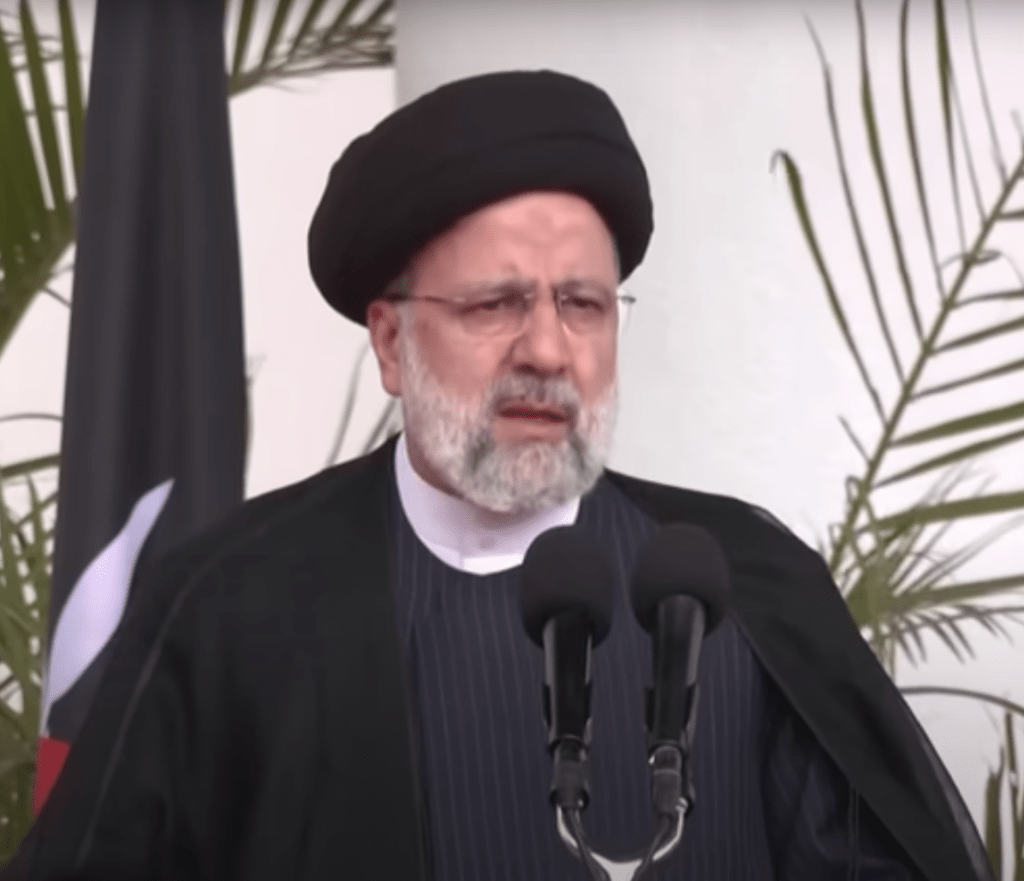
The ouster of Tsaghati also coincided with Iranian President Ebrahim Raisi’s remarks in early July condemning Western attitudes toward Gender and Sexual minorities while on a visit to Uganda. Uganda has, over the last decade, ratcheted up its anti-LGBTQIA+ campaign that culminated in the passing of the Anti-Gay legislation which prescribes the death penalty for Homosexual acts in the country earlier in the year, prompting widespread international condemnation, and a decision from the World Bank to withhold funding from the East African nation. “The West today is trying to promote the idea of homosexuality and by promoting homosexuality they are trying to end the generation of human beings,” Raisi claimed.
As for the two Gay Iranians in Europe and China, the future is only as bright as their ability to stay away from their home country, a country they love, but know would do away with them if given the chance.
 Piquing Duck
One thought on “No Gays in Iran: Dogged Anti-LGBTQIA+ Efforts Hound Queer Iranians at Home and Abroad”