
While continental Asia holds is home to a population of 4.561 billion as of 2018 and is divided into over 45 countries, many of which boast of great ethnic and cultural diversity, the term “Asian” is one that confounds much of the rest of the world. From Japan, North and South Korea, and the Philippines to the east, to Turkey and Iran to the West, Asia is as large as it is diverse.
However, when it comes to the use of the term Asian when addressing a group of people from the continent of Asia, the term is often used to denote people from South East Asia. Those who do not look “typically Asian” are subsumed under the banners of Caucasian or Middle Eastern. Those painted with this broad brush of Asian face unique challenges globally thanks to racist tropes that continue to be perpetuated to this day. And while “Asian women” are fetishized and seen as exotic sex objects, “Asian men” have been found, through numerous studies, to be the least desired group of men globally.
In this installation of the Desirability Politics series, we examine how Hollywood has had a hand in shaping the “Asian male” image in the global psyche.
Asian-face to No Asian Faces
Everything Everywhere All at Once is the latest big-budget blockbuster offering from Hollywood to feature an entirely Asian leading cast. Hollywood has long been accused of gross underrepresentation of minorities in America, key among them being Asians. From Asian-fishing in movies like Breakfast at Tiffany’s, in which the protagonist Ms. Golightly’s landlord who is meant to be Japanese, is played by the late Mikey Rooney, to stereotypically type-casting Asian actors in comical or mercenary roles, Asian faces, especially South Asian ones, have been a rarity in Hollywood films.
Only a handful of actors have, until recently, found success in Hollywood. Jacky Chan, who first made his name in the Hong Kong Movie circuit before finally taking his martial arts-driven characters to Hollywood, and Bruce Lee before him, are just some household names in the Asian actor community.
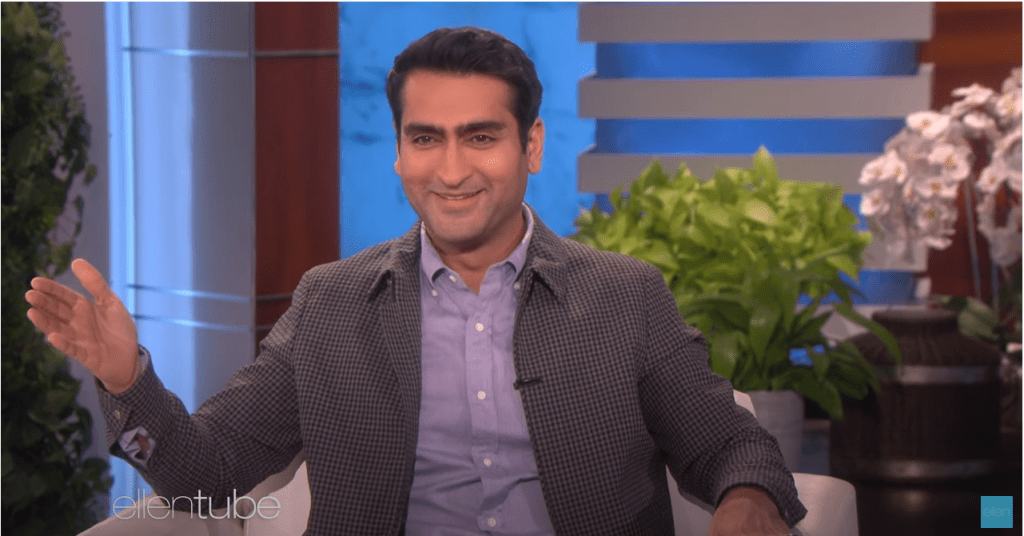
But in recent years, major blockbusters and large primetime series featuring Asian actors as leads and all-Asian ensemble casts have changed the tide in Asian representation. Actors like Chinese-Canadian Simu Liu, the first Asian Marvel Super Hero, Malaysian-British Henry Golding, the heartthrob from Crazy Rich Asians, 2021 Oscar nominee Steven Yeun, Bollywood powerhouse Irrfan Khan, who made his Hollywood debut in the cross-cultural film The Namesake, and later in the movie The Life of Pi in 2012, Dev Patel of The Marigold Hotel movie fame, and Pakistani-American comedian and writer Kumail Nanjiani who also featured in the Marvel superhero film The Eternals, are just some examples of Asian male leads changing the face of Hollywood productions.
Still, with increased visibility, critics claim that Hollywood has a long way to go in how it depicts Asian male characters. In 2016, netizens took to Twitter to protest the whitewashing of Asian characters in movies like Ghost in the Shell and Aloha. Using the hashtag #starringJohnCho, the campaign posited what Hollywood blockbusters would look like if some of the lead roles played by White actors were played by Korean-American actor John Cho.
The Butt of the Joke
Though some Asian actors have been a part of major TV shows and Hollywood films, they are rarely portrayed as desirable or street savvy in their roles as nerds with no social skills, immigrants with a negligible grasp of English, martial arts masters, or shadowy villains.
Indian-British actor Kunal Nayyar, who plays the character of Raj Koothrappali in the CBS sitcom The Big Bang Theory is introduced as an awkward immigrant student to the US, who is rendered mute by the mere presence of a woman. As the show progresses, he is cast as a gullible foreigner whose opinions are easily overlooked or overruled by his close circle of friends, a roob easily fleeced by women for his family’s wealth, and a general figure of fun despite being an accomplished scientist in astrophysics.
Likewise, the character of Han Margret Lee, a South Korean diner owner, portrayed by Chinese-American actor Matthew Moy is constantly derided for his bad English, unattractiveness, femininity, height, and overall undesirability to women. While in the movie Spiderman: Homecoming, though a science and tech prodigy, Filipino-American actor Jacob Batalon’s character Ned Leed acts as no more than Peter Park’s assistant who is constantly worried about his social standing in school.

And when not portrayed as nerds, immigrants, gangsters, monks-come-Kung Fu masters, or the model minority, they are then portrayed as wealthy, unattainably men who mirror Western standards of beauty of chiseled bodies that are not only far from the reality of the naturally leaner physiques most men of Asian descent have, but are also unattainable to a majority of everyday people of Asian descent.
In response to the lack of Asian male representation and lingering stereotypes in an Entertainment Weekly interview, Crazy Ex-Girlfriend star Vincent Rodriguez III recounted an encounter with a director. “I ran into the director in the hallway and he said, ‘Oh, yeah, when I saw you in the room dancing, I thought you looked just like…’ and he said the name of my friend who happens to be Filipino. I thought I’m invisible to you. Who I am and what I have to offer doesn’t matter.”
What is Asian?
It is easy to ask why Hollywood’s portrayal of Asian men matters. In the spirit of the adage “When America sneezes, the world catches a cold,” other than wars and invasions initiated by the US, Hollywood has been the single-most potent form of soft power wielded by the nation to spread its culture around the world. From American views on race and standards of beauty, to how groups of people, be they nationalities, races, genders, or a combination therein as defined by America, are therefore perceived and portrayed as either heroes or villains.
To start with, Asian as it is understood in an Americanized world, has little to do with being from or having Asian parentage. Though the acronym AAPI (Asian American Pacific Islander) is used in racial discourse, the image conjured by the word “Asian” is far from Dwayne “The Rock” Johnson and Jason Mamoa, and has more to do with those with stereotypically South East Asian features, mainly Chinese, Korean, or Japanese. Indians, Pakistanis, Bangladeshis, and Sri Lankans inhabit a unique category of their own generally considered to be people of color or POC, while Afghans, Iraqis, and Iranians are subsumed under the seemingly intertwined religious and regional identities of Muslim and Middle Eastern/ Arab.
Read More:
- Matty Healy and the Cult of the White Savior: The Problem with Performative Allyship
- Dangerous Disinformation: Sex-ed Seminar Encourages Anti-LGBT Discrimination in China
- The Erdoğan Solution: Gender and Sexual Minorities Targets in Turkish Culture War Battle
In her book Reel Inequality: Hollywood Actors and Racism, Nancy Wong Yuen notes, “Hollywood’s stories, though fictional, transmit real ideologies. When film and television privilege white stories over other stories, they reinforce a racial hierarchy that devalues people of color. Not only do dramatic racial disparities indicate employment discrimination in Hollywood, [but] the underrepresentation of people of color in film and television can also have wider societal consequences.”
With mostly white Hollywood personnel —from professional actors to decision-makers responsible for creative and casting choices – at between 74 and 96 percent, assimilation is important. Actors from minority groups have to conform to the standards of the majority. Though there is an unmistakable increase in Asian male presence on the silver screen, the parameters of such cameos are narrow and predetermined, designed to drive an America-centric narrative that has little to do with the actors embracing and exploring their identities in relation to being American but being or striving to be American despite their Asian identities.
Options
The appearance of Filipino-American Paolo Montalban in the 1997 live-action Cinderella film was a cultural reset on the image of Asian men in media, as the world had its very first Asian Prince Charming. Since then, though gradual, the stereotypical image of the Asian male from the meek protagonist or insanely violent antagonist to the film Heartthrob has occurred.
An increased visibility has indeed made it possible for regular people to see Asian males as viable dating options, and as sexual beings, though there is a disparity between what the appearance of the ideal Asian heartthrob on the silver screen, and what your average Asian male dater might look like. What’s more, what’s accepted outside of and within the variety of Asian cultures in terms of masculine beauty is as different as water and oil.

In recent years, the more androgynous, “beautiful man” Boy’s Love (BL) male look has become the epitome of desirability in Asian countries like China and Korea, though this shift from a more typically masculine archetype has received pushback from a segment of the South East Asian community, including from the Chinese government in its campaign against “sissy boys” launched in 2021.
This image is, however, incongruous with the Hollywood aesthetic popularized among Gay men globally by the Americanization of Queer identities. Stereotypes about Gay men being obsessed with exercise and bodily perfection are vicious self-fulfilling prophecies non-White daters navigate a “no fats, no fems, no Asians” dating landscape, both in Asia and the West.
In the next installment of the series, we explore how beauty standards in East Asia and the West, especially in America clash, and how the Gay male gaze has not only continued to perpetuate the pursuit of the stereotypical “body-beautiful”, but has also led to the infiltration of such impossible standards of bodily perfection among Queer men in South Asia.
Photos: Unsplash, YouTube Screenshots (videos linked in captions)
 Piquing Duck
3 thoughts on “Desirability Politics: The Slow Transformation of “Asian” in Hollywood’s Hierarchy”