
Recently, British Indie band The 1975’s show was cut short and subsequent shows scheduled for the next two days in the Malaysian capital of Kuala Lumpur were canceled, after the band’s lead performer, Matty Healy, kissed the band’s bassist Ross McDonald and ranted about the country’s anti-homosexuality laws. In his rant, Healy declared that the band’s performance in the Asian country where homosexuality is illegal had been a mistake, further adding “I don’t see the f**king point, right, I do not see the point of inviting the 1975 to a country and then telling us who we can have sex with.”
Healy issued a half-hearted apology for any offense to revelers present “if that offends you, and you’re religious,” but also declared that he didn’t care anymore. “If you push, I’m gonna push back. I’m not in the fucking mood.” Shortly after the incident, the band’s performance was cut short just 30 minutes into their set. In a statement released by event organizers, the reason given for the cancelation of the band’s scheduled performances was “due to non-compliance with local performance guidelines.”

Malaysia, which was ranked the second-worst country in the world for Trans rights in 2023 for its zero-tolerance policy on Trans-expression, has no legal protections for gender and sexual minorities, and homosexual activities are punishable by a jail sentence of up to 20 years, caning, and fines. In May this year, a member of the opposition in the Malaysian parliament called for Coldplay’s November concert in Kuala Lumpur to be canceled due to the group’s support for the LGBTQIA+ community.
In a series of tweets, Malaysian Islamic Party (PAS) member, Nasrudin Hassan, questioned whether the government “want to nurture a culture of hedonism and perversion in this country,” alongside screenshots showing the Coldplay band lead Chris Martin holding a Pride flag. These calls were however dismissed by government Development Minister Nga Kor Ming, who mentioned the band’s philanthropic activities in Malaysia, as well as pointing out that such a concert would be good for the Asian country’s economy.
Healy’s actions, through praised by some including his mother who showed her support on Twitter, were decried by many, including LGBTQIA+ rights organizations, activists, and Malaysian Queer personalities. In an interview with the BBC World Service News Hour, Carmen Rose, a Malaysian drag queen condemned Healy’s actions as “performative, ” “unruly,” and “giving white savior complex,” while expressing her concern that his actions would provide ammunition to homophobic political factions in the lead up to the country’s elections, where “the government is not on our side.” Rose also concluded that Healy “wasn’t doing it for our community.”
Heartfelt Performance
Performative allyship has been around for as long as there have been causes to support, but in recent times, racial tensions in the West as exemplified by the rise of the Black Lives Matter (BLM) movement and the proliferation of social media platform use, have collided to create a neo-blueprint for performative allyship. This has, most recently, been extended to the support of gender and sexual minorities around the world amid raging gender and culture wars. In the first instance, when BLM gained traction on social media after the death of George Floyd at the hands of a white police officer, netizens from around the world added the BLM hashtag to their profile bios.
Though massive anti-racism rallies were organized in major cities around the world, the hashtag allowed those who posted their support on social media to avoid any physical or psychological harm suffered by those in attendance. To their credit, those who posted under the hashtag may have thought that optical allyship was a sufficient form of support, but many are the times when social media influencers have been “caught out in the wild” taking strategic photos of staged physical participation only to be seen exiting stage left moments after the photo-op is concluded.
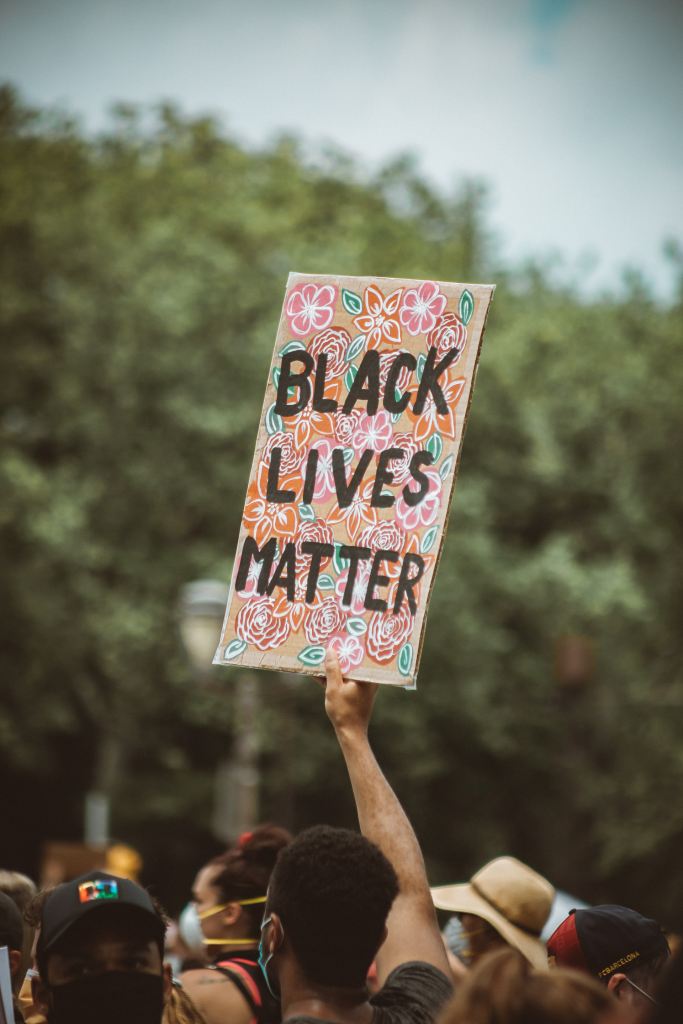
Later on, a call to action to post black squares under the same hashtag on Instagram was decried by activists as it only served to “push down” the faces and relevant stories of Black people affected by police brutality and racially-motivated crime on the hashtag’s timeline. Though the black square posting trend eventually stopped, the use of the BLM hashtag only increased in popularity, with everyone from actors to large companies branding themselves as allies to the Black racial justice movement.
As early as 2016 when the BLM movement was in its fledgling stages, Ben and Jerry’s posted support for the movement on its Facebook page, not only setting itself apart from other corporate entities as an ally to racial equality but also able to profit monetarily by aligning itself with a movement that was on the right side of history.
In a paper titled “Challenging the dialogic promise: how Ben & Jerry’s support for Black Lives Matter fosters dissensus on social media,” published by Erica Cisnek and Nneka Logan, this form of allyship by Ben and Jerry’s and similar corporate entities was described in the context of antiracism as no more than shallow support “called optical allyship. More broadly, it is one flavor of virtue signaling. […] This sort of virtue signaling seems like selfishness covered in a thin shell of goodness, a way to score social points rather than by doing the work of real reform.” In the same vein, companies engage in financially beneficial forms of virtue signaling and optical allyship in June, when corporate branding is transformed to indicate support for the LGBTQIA+ community, as Pride-themed products are mass-marketed, and some of the corporations become brand sponsors of Pride event. This has been termed as “rainbow-washing.”
The Fame Trap
Most recently, with the rise in opposition against LGBTQIA+, and especially Trans rights, corporations, and celebrities have jumped on the bandwagon as Gay and Trans rights campaigners, declaring their support for gender and sexual minorities, with some even coming out as members of the community themselves, while others have and continue to engage in queerbaiting. Christina Aguilera famously took to the stage at the L.A. Pride stage at Los Angeles State Historic Park concert in 2022 sporting a strap-on dildo on top of a Hunk bodysuit, to the praise of some and the ire of conservatives in the US.
Major celebrities including British Popstar Harry Styles also stand accused of qeerbaiting, mainly by declining to comment on their sexuality, and wearing gender-nonconforming clothing. After a Rolling Stones interview, Styles came under fire for opining on Gay sex, saying that his role in the film My Policeman set in the 1950s would bring some “tenderness” to Gay sex scenes portrayed in mainstream movies, and added, “So much of Gay sex in film is two guys going at it, and it kind of removes the tenderness from it.”
Though some positives can be found in the actions of celebrities accused of queerbaiting, including sparking pertinent discussions around matters Queer, especially among their mostly straight fan bases, and increased visibility and acknowledgment of Queer issues, for the most part, such celebrities become the central focus of any such attention, eclipsing the issues they wish to highlight. Healy’s actions in Malaysia and Dubai and the resulting backlash are excellent examples.
Read More:
- Dangerous Disinformation: Sex-ed Seminar Encourages Anti-LGBT Discrimination in China
- The Erdoğan Solution: Gender and Sexual Minorities Targets in Turkish Culture War Battle
- Living Nightmare: Former Shanghai Resident Arrested in Turkey for “Looking Gay”
Much like the saying “the road to hell is paved with good intentions,” celebrities’ actions visa vis activism, though arguably well-intentioned, can often lead to more harm than good. To start, inherent ignorance of matters beyond the surface issues celebrities attempt to rally behind, including the kind of support needed by the community in need as detailed by them, an assumption that proposed solutions can be duplicated and results can be replicated regardless of cultural, political, social, and economic considerations, consequences that may befall the community being supported as a result of increased attention and seeming alignment with the celebrity in question, and fickleness in supporting the community long-term without hopping from one cause to another, all spell the inadvertent failure of advocacy efforts.
All these factors converge to create the fantastic beast that is the White Savior – White individuals from the affluent West, armed with limited information about their target quarry of oppressed and marginalized victims in dire need of not just any sort of help but help specifically from them. Led by a sense of moral superiority and self-serving benevolence, they are not interested in inquiring how they may be of use to a cause or provide useful help, but rather in proselytizing and issuing declaratory statements on how things “should” be, and are quick to “correct” those in the community they think they are serving when they express displeasure in or uncertainty at the alleged ally’s strategy.
On two occasions, the lead singer of 1975 showed a blatant disregard for, not only the customs and laws in the countries in which he pulled his declaratory stunts, but also for the direct consequences that he and, for instance, the man he kissed in Dubai, could have faced, and also the resultant backlash against the rest of the band as a unit. His real-time expression of regret at being in Malaysia leaves more questions than it provides answers.
For starters, criticizing the government for its stance on homosexuality means that he not only knew about the country’s anti-homosexuality laws, but knew beforehand and decided to proceed with a trip to the country despite the fact, and, as if having learned from his antics in Dubai in 2019, in kissing his bandmate, knew there would be backlash, but assumed that he was exempt from any form of severe punishment beyond a potential slap on the wrist, on the grounds of his being foreign, a citizen from an influential Western power, and by virtue of his celebrity. He was right, in so much as the band only suffered the cancelation of subsequent performances in Malaysia by the Malaysian Ministry of Communication, rather than immediate arrest and arraignment in court for contravening the country’s laws.
Healy’s decision to bring attention to anti-LGBTQIA+ laws in the two countries in which he and his band were slated to perform, can also be seen not only as virtual signaling but also as optical allyship. Though such actions do draw attention to an existing injustice, they serve more to benefit Healy by propelling his popularity through notoriety, translated by the right audiences as bold allyship. While he stands to lose no more than immediate monetary gains which will soon be recoupled from being thrust into the public limelight and expanding his audience base, the props used in his activism – the man in Dubai, and the supposed benefactors of his benevolent gesture – the LGBTQIA+ communities both in Dubai and Malaysia, face real-life consequences, be they legal or social.
And yet, Healy’s defensive posturing is inescapable, in his address to the Malaysian concertgoers. The very man who stands accused of making racist and sexist remarks felt it was his place to imply that by virtue of concertgoers potentially being majority Muslim, his thoughts on anti-LGBTQIA+ laws would offend them, thanks to his supposed deep-seated aversion to perceived injustice.
This raises the question as to whether we do hold celebrities and their actions to a higher standard. And the answer might well be yes since celebrity brings with it responsibilities both welcomed and unwarranted. Having a massive platform and influence means that celebrities’ actions are not mere human reactions in the moment but butterfly-effect generators, the results of which reverberate far and wide.
Healy’s actions might give pause to authorities in more conservative nations as to whether or not to allow him and the 1975 group to perform, denying international audiences a much-desired opportunity to experience the band at a live performance. More notably, however, in the current reactionary atmosphere of international political discourse around minority rights, a mere band like 1975 could be seen as an agent of Western imperialism and moral policing against socially or religiously conservative countries, leading to the enactment of reflexive laws and policies which would not only prevent any form of activism by way of staged protests during live performances but also undo any advances in grassroots and institutional advocacy in said countries.
And while this would serve as more of a reason for Healy and his band to continue the supposed fight for the rights of gender and sexual minorities, it benefits no one in the short- and potential long-term and only adds to the pile of self-serving virtue-signaling antics employed by the merry band of globe-trotting White Saviors.
Photos: Krista Mangulsone, Victoria Marshall, Edgar Chaparro via Unsplash,
 Piquing Duck
2 thoughts on “Matty Healy and the Cult of the White Savior: The Problem with Performative Allyship”