
Imagine being on holiday in one of the world’s most beautiful and historic countries, one that you have longed to visit for as long as you can remember. While asking for directions from police officers, you are placed under arrest. You have unwittingly stumbled into a sweep. The reason for your arrest? You look Gay!
As it turns out, the city you have chosen to visit has had a series of canceled Pride events, with hundreds if not thousands of LGBTQIA+ protesters and Pride celebrants taking to the streets despite a ban instituted in 2014 on such events, which then leads to running battles with police and the arrest of scores of attendees. You then spend the better part of 20 days being held in multiple prisons, detained among hardened criminals, unable to access any help to secure your freedom.
This was the nightmare 34-year-old Miguel Álvaro Pereira lived through while on a trip to the Turkish city of Istanbul in June this year. The Portuguese-South African national who moved from Shanghai, China to Brazil, was ultimately released after the harrowing ordeal and is safely in his current country of residence. He will, however, never forget the encounter.
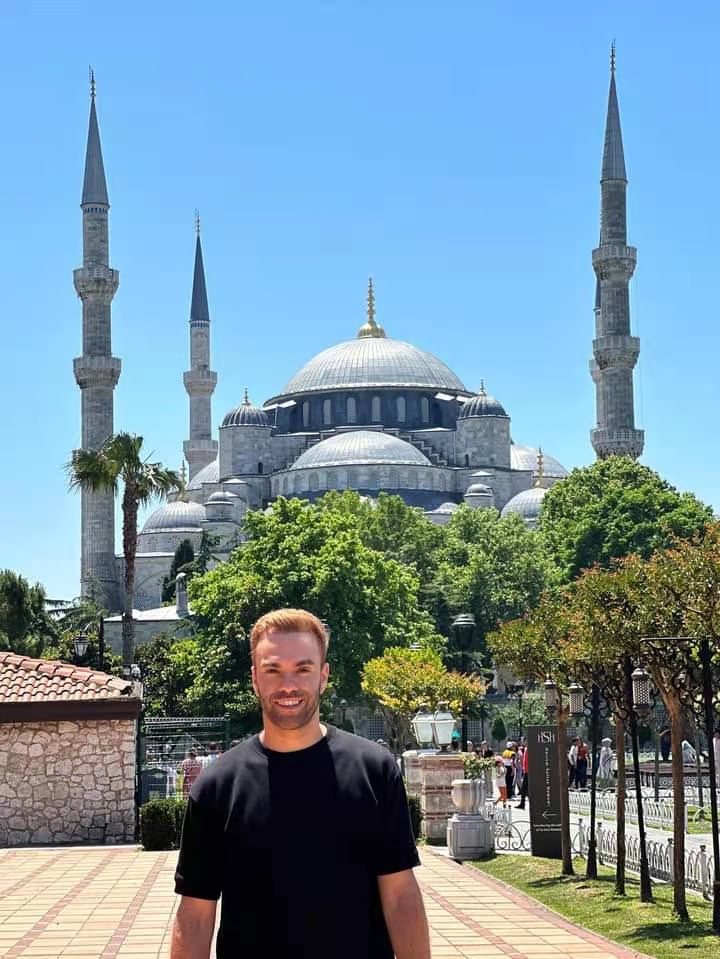
“I just remember bleeding and thinking, ‘Why is this happening to me?’ I kept asking why was being arrested but no one spoke English and could help me,” Pereira painfully recounted to Piquingduck. Though home safe and sound, he continues to fear for the fate of his friend, an Iranian Gay refugee in Istanbul, with whom he was arrested, as he faces deportation back to Iran where Homosexuality is punishable by death.
As a bridge between West Asia and Western Europe, the predominantly Muslim country with a history spanning thousands of years has, in the past, been heralded as an outlier in the Muslim world in terms of LGBTQIA+ rights. It is one of only two predominantly Muslim countries in Asia, the other being Indonesia, where Homosexuality is not a criminal offense.
Turkey has also been a safe haven for gender and sexual minorities fleeing draconian laws in countries like Iran. A story of a Gay Mullah from Iran covered by the BBC highlighted the uniqueness of Turkey as an accepting and progressive Muslim country where the two seemingly contradictory identities – Queerness and Islam – coexisted. Cities like Istanbul, the BBC report highlighted, also boasted of Gay clubs and gathering spots, far from the situation in other predominantly Muslim nations in the region. Now, however, such spaces are rare.
Recent events have put gender and sexual minorities in the country at risk. The country’s reelected President, Recep Tayyip Erdoğan, who, since his debut in Turkish politics in 2003, has promoted conservative Muslim societal views, escalated his attacks against the LGBTQIA+ community in the lead-up to and after his reelection. In his acceptance speech, President Erdoğan declared that LGBTQ people would never “infiltrate” his government after stating that “the family is sacred for us.” During his campaign, the president also called LGBTQIA+ people deviants, claiming that they were “spreading like the plague” and characterized the group as a threat to society, talking points similar to those employed by conservative leaders around the world who employ anti-LGBTQ sentiment to rally the electorate.
Similar to moves seen across China, LGBTQIA+ clubs in universities across the country have been shut down, while members of the community in Turkish society face increased restrictions in visibility, in securing employment and housing, and in accessing quality healthcare, despite the country having laws against discrimination. Such issues have been exacerbated by Erdogan’s call to local authorities to not only restrict LGBTQIA+ activities but to also increase crackdowns on gay rights activism, the New York Times reported. Such actions leave LGBTQIA+ individuals vulnerable, not only to discrimination but to acts of physical violence, left with no recourse after attacks as the police are generally indifferent to such reports.
According to a report by Transgender Europe, 62 Transgender people were killed in Turkey between 2008 and 2022. Additionally, an ILGA-EUROPE survey ranked Turkey as second—to—last out of 49 European countries in LGBTQIA+ human rights. The president also withdrew Turkey from the Council of Europe’s Istanbul convention on violence against women in 2021, an accord which was signed in 2011, meant to prosecute and eliminate violence against women and domestic violence, while promoting equality. In 2020, the country saw an uptick in femicides, while opponents to the treaty claimed that provisions therein undermined the family structure, and some saw it as promoting homosexuality through its principle of non-discrimination on the grounds of sexual orientation.
Read More:
- Living Nightmare: Former Shanghai Arrested in Turkey for “Looking Gay”
- Not a Straight Affair: How Climate Change Affects Gender and Sexual Minorities in S. Asia
- BL Chronicles: The Birth of a Genre and Intellectual Claims
In an interview with the New York Times, 26-year-old Nazlican Dogan, who is facing legal charges related to participating in pro-LGBTQIA+ protests, said that what those like the Turkish President want to do is “to impose on society in terms of other values is full of hatred and violence toward us,” adding that such an environment made those like her feel like they cannot exist in the country and should just leave. To Dogan’s point, in April, Erdogan’s Interior Minister, Sulayman Soylu, claimed that Gay rights would open the door to bestiality.
Gülsüm Kav, a co-founder of the group We Will Stop Femicide (WWSF), a group fighting to stop violence against women and LGBTQIA+ people in Turkey, warned that propaganda by elected officials would lead to a hazardous environment in which LGBTQI+ people and women faced increased attacks, the Guardian reported. There is growing concern among Turkey’s LGBTQIA+ individuals that the president’s sentiments will lead to the institutionalization of anti-LGBT discrimination through a change in law, not only further alienating the country from the EU blog into which Turkey is seeking membership, but will also leave gender and sexual minorities vulnerable and unprotected.
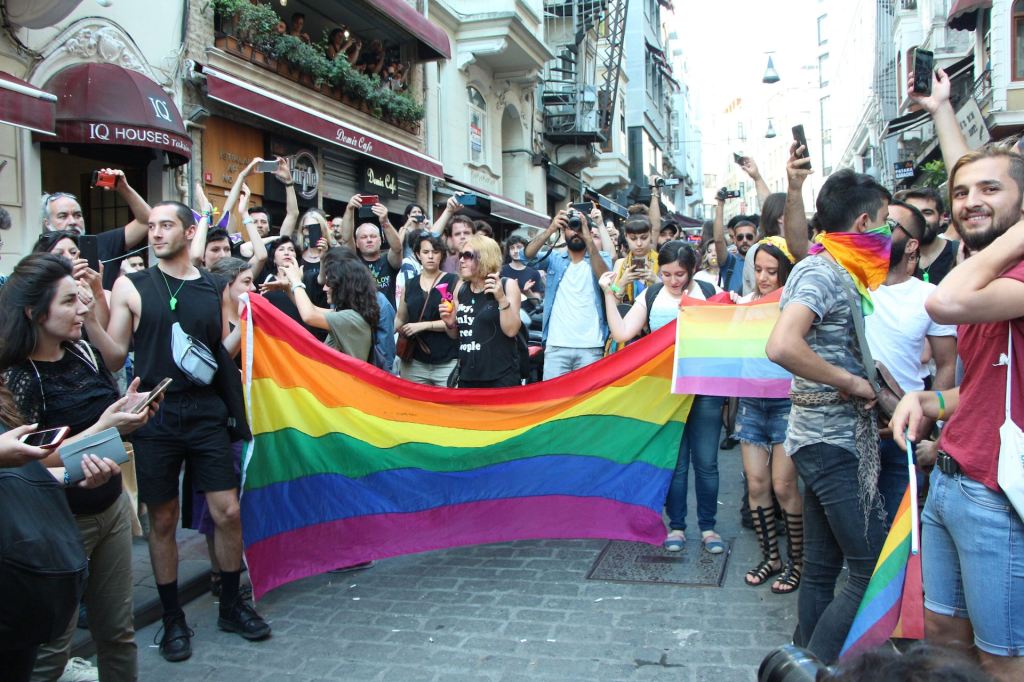
Despite the anti-LGBTQIA+ sentiment permeating Turkish society, Homosexuality is nothing new in the region in which the country of Turkey now stands going as far back as Greek antiquity. During the period of the Ottoman Empire, pedestary was widely practiced, with several Sultans known to have engaged in the practice. Upon the founding of the Republic of Turkey, the country’s first president, Mustafa Kemal Ataturk, not only secularized Turkey but also further aligned the country with Western standards of morality which were primarily based on conservative Christian doctrine and frowned upon homosexuality, leading to an increase in discrimination against the LGBTQIA+ community.
It was, however, not until the mid-1970, with the election of the Republican People’s Party forming a coalition government with the National Salvation Party that anti-LGBT sentiments were weaponized, and those in power through various arms of government began frequent and increasingly violent crackdowns against the LGBTQIA+ community.
Public figures like openly Trans drag performer Bülent Ersoy became targets of subsequent attacks against the LGBTQIA+ community in the 1980s under the military regime formed after the 1980 coup d’état. Persistent persecution by the police through the 1980s led to the first large-scale LGBTQIA+ hunger strike protest which was initially meant to last for 10 days but extended to several weeks. In 1993, Turkey’s first-ever Pride event was organized but was swiftly banned by the government, resulting in the incident being included in the Commission for Human Rights of the European Parliament’s annual progress report.
The banning of Istanbul Pride and the subsequent crackdown by police forces leading to mass arrests was condemned by Amnesty International. In a statement released days before the Istanbul and Izmir Pride marches scheduled for June 25, the organization noted the arrests of numerous protesters and activists across the country noting, “Since 2015, Pride events have been systematically banned in Türkiye. This Pride season, even small events such as picnics and film screenings have been cracked down upon by the authorities.” The statement also attributed to the increased crackdowns on “Discriminatory language by politicians, including high-ranking government officials, targeting LGBTI people both before and after Türkiye’s recent elections has been accompanied by restrictions and detentions across the country as Pride Month hits its stride.”
Photos: Unsplash, Türkiye LGBTİ Birliği (via Unsplash)
 Piquing Duck
One thought on “The Erdoğan Solution: Gender and Sexual Minorities Targets in Turkish Culture War Battle”