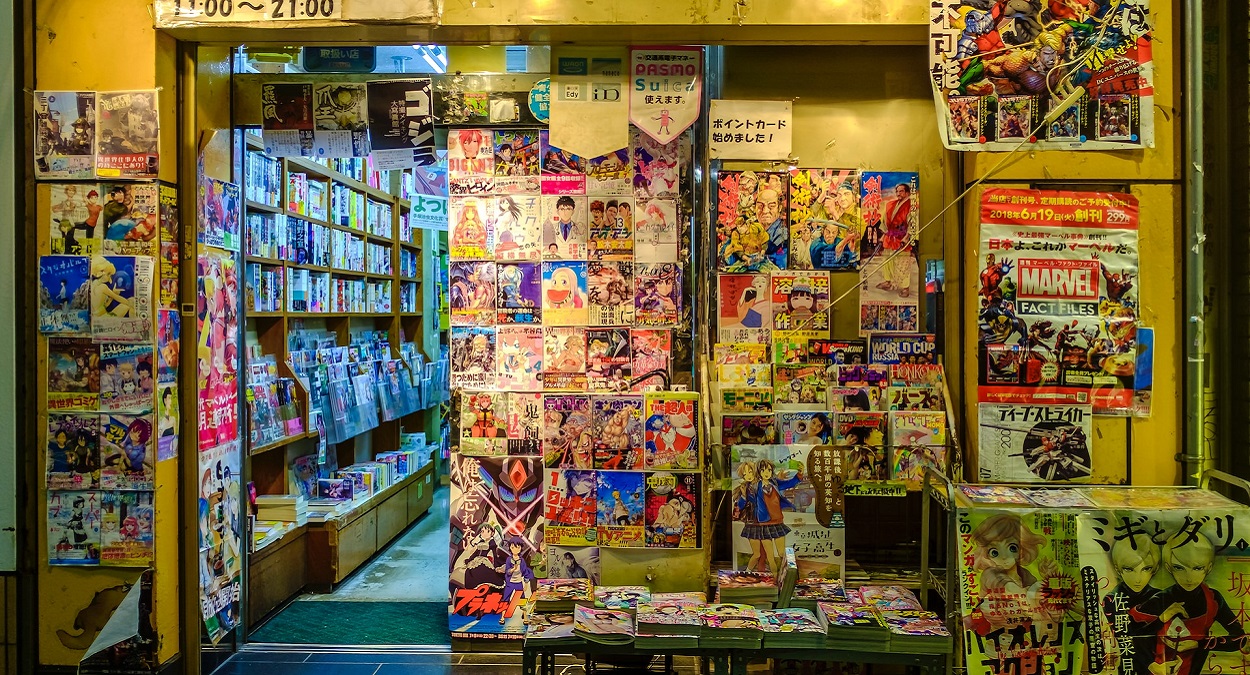
Described as a genre of homoerotic manga and novels aimed at a female readership, the Boy’s Love (BL) genre has exploded in popularity across the world. BL television shows, video games, and short online series are all the rage. BL culture has a particular foothold in Thailand, China, Taiwan, and Korea, with the stories told depicting the unique struggles and experiences of LGBTQIA+ people in society. The male characters, often young and exploring the bounds of life, love, and sexuality, have found fervent support from a predominantly female audience. But is there more to the genre than meets the eye?
This series explores all things BL, from creation to evolution to the permeation and acceptance of the genre not only in Asia but around the world. This is the first installment.
An attractive young home returns home to find two equally attractive male strangers awaiting him at the entrance to his home. The two strangers, much to the young man’s surprise, introduce themselves using names familiar to him – his now-deceased pets’ names. The two strangers breathlessly reveal that they indeed are the young man’s cat and dog, returned in human form to provide him with the companionship he so desperately needs, though he doesn’t realize it just yet. Hijinks and adventures ensue. Sounds fanciful? Well, this is the plot of Korean Boy’s Love dramedy Coco Milkshake on YouTube.
In recent years, video streaming platforms like YouTube have become awash with shows like Coco Milkshake, characterized by unique, yet often simple premises and storylines, running the gamut from slapstick comedy to emotive drama, all with similar conclusions or endings – boy meets boy, adventures ensue, life changes, love is found or loss is suffered. Whatever the conclusion, the shows, whether viewed on mainstream broadcasting platforms, or on streaming platforms, have amassed a cult-like following, with starts, regardless of sexual orientation gaining fame from the increasingly popular genre. But with popularity comes with criticism and scrutiny, and many have lambasted the BL genre for working against the best interests of Gay men.
How did we get here?
A Brief History
Now a global phenomenon, BL traces its roots back to 70’s manga geared toward a female readership as created by a crop of young female manga artists who produced content that they themselves wanted to read. Male protagonists gave creators the independence to create bold erotic narratives where once they may have been stymied by using female characters due to women’s position societally at the time. From the first shōnen-ai (adolescent boys’ love) manga created by a group of female writers labeled the “Year 24 Group of Flowers” to the advent of Yaoi, or parody manga published in dōjinshi (amateur, self-published magazines), the BL grew exponentially between the 1970s and the early 1990s when more mainstream publishers in Japan saw the profitability of the genre.
The growth in the popularity of BL in Japan is credited to a few factors. Post World War II, those in the older generation and the ruling class in the country were far more acutely aware of a need for free speech, after the years of wartime censorship in the country. Additionally, erotica material for female audiences has rarely been taken seriously in the country, with BL manga, despite some containing explicit scenes of rape and incest, not being labeled as pornography. There was also a dearth of manga geared toward women. Up until the advent of the new generation of female manga writers and artists, manga for female audiences were created by male artists who had little to no understanding of their readers’ needs.
In the recent past, however, the genre has come under greater scrutiny and censorship, with Tokyo and other jurisdictions in Japan designating BL manga as harmful literature. Such censorship extends beyond Japan to countries like China, where BL novels enjoy a wide readership but themes of male love are banned from being aired on TV. BL works have led to two arrests in the past, with one creator receiving a 10-year prison sentence for publishing said content without government approval in 2018. Additionally, Chen Qing Ling (The Untamed), a historical-fantasy television drama based on a BL novel was reframed for TV, changing the romance between the male characters to no more than a strong male bond; a “bromance.”
Read More:
- Phobia: Spike in Confirmed Mpox Cases Risks a Repeat of COVID Period Social Panic
- All Press is Good Press: Prominent Asian Public Figures and Their Impact on Queer Discourse
- Unity in Diversity: Gay Games to Make Asian Debut in Hong Kong
Fly in the Milk
The genre, however, is not without controversy. In Japan for instance, fierce debate on Yaoi or “yaoi ronsō” broke out in the early 1990s, in which some in the gay community decried the genre as fetishizing gay people, depicting gay sex as frivolous, and imposing aesthetic norms on the gay men. An essay by Satō Masaki in the feminist coterie magazine Choisir in 1992 admonished the female readers of Yaoi, dismissing them as “those disgusting women who
. . . have a perverse interest in sexual intercourse between men. . . I wish them all dead.” Critics of the genre also claimed that authors had no interest in real gay people, an opinion that was corroborated by an essay by Ryōko Yanagida in which she stated that yaoi had nothing to do with Satō (gay man). “Gay people might feel their own turf being intruded upon when they have once read a Yaoi book. But we also feel the same way when Yaoi books are read and commented on by gay men (and others who may not appreciate Yaoi in general),” Yanagida stated.
This stance was however countered by several stakeholders in the Yaoi/BL manga and anime world in Japan, including Kurihara Tomoyo, the book review editor of the magazine June which was dedicated to the BL genre, who questioned how anyone could reconcile such “nonchalance,” and comparing it to “some American author [who] dashes off some absurd adventure-romance novels about Japan like [ James Clavell’s] Shogun, and yet assumes a defiant attitude by insisting that what is described in his/her works is not representative of Japanese reality but simply his/her ideas and fantasies.” Editor of Choisir, Irokawa Nao echoed the sentiments stating that claiming yaoi representations were simply imaginary works that couldn’t contribute toward intentional discrimination against gay people was just “mere vindication and self-protection.”

Such debates sparked the BL shinkaron (The Theory of BL Evolution) in which authors produce new-age BL that are truer to the Gay experience in complexity and approached with greater sensitivity. Though the conversion of BL manga and anime into television dramas and series is believed to have bridged the gap between BL fiction and gay reality, there is still a long road ahead for the genre to fully win over gay audiences.
Converting BL works into television shows has yet another trap door. Actors cast for B dramas are often men who embody societal standards of attractiveness and are meant to attract a wider viewership. Unfortunately, this further cements unattainable, often harmful standards of desirability among gay men.
Since the early 2010s, a growing movement of “Leaving BL” in Korea has emerged. Having become popular in the 1990s, BL became an avenue through which Korean women could express themselves, shunning limiting Confucius and Christian ideals and dogmas around female expression. However, similar issues addressed by opponents of BL in Japan captured the attention of Korean BL fans, with the genre standing accused of erasing the complicated relationship between representation, fantasy, and reality, ignoring the complexity of readers’ desires and artists’ desires in reading and creating BL, and considering BL and its artists as a major cause of misogyny in the real world.
To the proponents of Leaving BL, Assistant Professor and cultural anthropologist Dr. Hyojin Kim, in her article on the same topic noted, “It is important to remember that BL manga was created in Japan at the beginning of the 1970s and welcomed in 1990s Korea, and in both contexts, the popularity stemmed from the fact that it was virtually the only genre that enabled women to express and explore their sexual desires and transgress the boundaries of masculinity and femininity. This history is a critical point that the proponents of leaving BL have failed to address.”
Photos: Unsplash
 Piquing Duck
4 thoughts on “BL Chronicles: The Birth of a Genre and Intellectual Claims”